Online now
Online now

Madam's Manor

Welcome to Madam's Manor, a space dedicated to the authentic exploration of the Dominance and submission (D/s) lifestyle. Authored by Madam and Her servant, this blog is an open chronicle of our personal journey, the everyday realities of our dynamic, and the lessons we continue to learn together.

We created Madam's Manor not just to share our story, but to serve as a guiding light for others. Whether you are simply curious, taking your very first steps into the lifestyle, or looking for ways to strengthen an existing dynamic, you will find a welcoming community here. Through education, practical advice, and dedicated mentorship, we are here to help you navigate the beautiful complexities of power exchange with safety, clear communication, and profound connection. Step inside, and let's grow together.
4 days ago. Monday, July 20, 2026 at 9:58 PM

"Bratting" is one of those things that’s easy to misunderstand if you’re looking at it from the outside. People see the eye-rolling or the sass and think it’s just someone being difficult, but if you’re in the thick of it, you know it’s actually a really specific, high-stakes way of saying, "I need you to take charge."
It’s essentially a paradox: the submissive is being defiant, but they’re doing it specifically to feel the safety of the Dominant’s authority.
Here is the breakdown of how this actually feels in practice.

The Difference Between "Playing" and "Living It"

We often switch between bratting as a "mood" and bratting as a "lifestyle." Understanding which one you’re in makes a world of difference.

  • Bratting for Play (The Weekend Version): Think of this as a spark. You’re having a date night, you’re feeling spicy, and you want to stir up some trouble to get a reaction. It’s like a game of cat-and-mouse—fun, intense, and contained. Once the scene is over and the dust settles, you go back to your normal rhythm. It’s an adrenaline rush, nothing more.
  • Bratting with a Dominant (The Anchor): This is where it gets real. When you’re in a committed D/s dynamic, bratting becomes a way to test the fences. It’s the submissive’s way of checking, "Are you still there? Are you still strong enough to handle me?" When a Dominant steps up and firmly (but kindly) shuts that behavior down, it’s not an argument—it’s a relief. It’s the submissive saying, "I trust you to keep me grounded."


Is It a Habit or a Personality?

There is a big difference between someone who acts bratty and someone who is a brat.

  • Bratting (The Action): This is a tool in your kit. You’re usually the picture of compliance, but today you want to push buttons. You turn it on when you want to feel that specific kind of tension, and you turn it off when you’re done.
  • Being Bratty (The Identity): Some people are just wired this way. It’s their default setting—they’re naturally sassy, independent, and a little bit subversive. If you’re a Dominant with a partner like this, you aren't trying to "fix" it; you’re just learning how to channel all that fire in a way that’s constructive rather than exhausting.


The "Danger Zone": When Bratting Becomes Just Plain Mean

This is the most important part to get right. The line between "playful" and "toxic" is thin, but it’s real. If you’re ever wondering if you’ve crossed it, look at the intent.

  1.  Is it an invitation or a wall?
    1. Bratting is an invitation to connect. It’s saying, "Look at me, come talk to me, engage with me." Disrespect is a wall. It’s meant to sting, to demean, and to push the other person away. If the goal is to hurt, you’ve stopped playing and started damaging.
  2.  Is there a "Hard Line"?
    1. Good bratting happens in the safe space you’ve built together. You both know the triggers, the hard limits, and the topics that are off-limits. Disrespect ignores those boundaries entirely. If someone starts hitting below the belt—or ignoring your "no"—that isn't a power exchange; it’s a violation of trust.
  3.  What does the "After" feel like?
    1. This is the ultimate litmus test. After a bratty scene, there’s usually that "subspace" glow. You feel closer, safer, and more connected. If the dynamic is rooted in disrespect, there is no aftercare—only resentment, distance, and a feeling that something in the foundation just cracked.


At the end of the day, BDSM is built on a bedrock of respect. If that isn't there, the rest of it just doesn't work.

Where do you feel the most friction or confusion when trying to navigate the line between playful defiance and genuine disrespect in your own experiences?

1 month ago. Saturday, June 13, 2026 at 2:57 AM

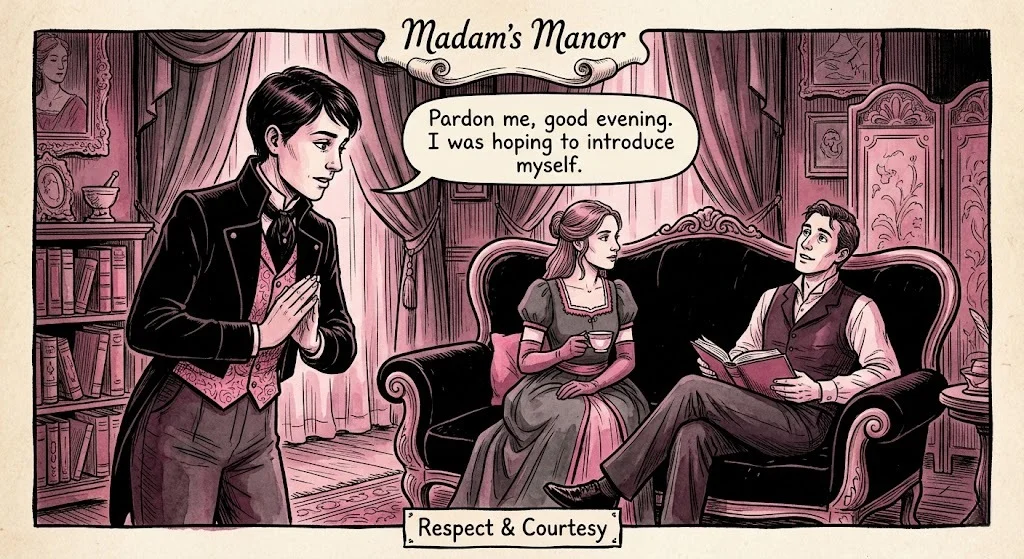
Welcome to Madam's Manor. Whether you are stepping into a local dungeon for the first time or navigating the complex web of online kink communities, your behavior is your calling card. In the vanilla world, etiquette might be about knowing which fork to use. In the BDSM and kink community, etiquette is the very foundation of safety, consent, and mutual respect.


Part I: The Dominant’s Perspective
By Madam

From a Dominant’s perspective, how you conduct yourself in these spaces tells us everything we need to know about your discipline, your understanding of boundaries, and your potential as a partner. Good etiquette is deeply attractive; poor etiquette will find you swiftly ignored, blocked, or asked to leave.

The Core Tenets of Kink Etiquette


Before breaking down specific environments, you must internalize the three pillars of community protocol:


Consent is Absolute: This extends beyond physical touch. It includes emotional energy, time, and conversation.
Assume Nothing: Never assume someone's dynamic, sexual orientation, limits, or desire to interact based solely on their attire, collar, or online profile.


Respect the Dynamic: If you see two people interacting, especially if one is visibly collared or they are deep in conversation, treat their space as sacred.


Navigating the Digital Dungeon: Online Etiquette


The screen is not a shield for bad behavior. Platforms like FetLife, Discord servers, and kink-focused forums are community spaces, and treating them like a free-for-all dating app is a surefire way to be ostracized.


The "Hi, Mistress/Master" Trap: Just because an individual identifies as a Dominant or submissive does not mean they are your Dominant or submissive. Entering a direct message demanding to serve or be served, or calling a stranger by a title they haven't earned from you or permitted you to use, is presumptuous. A polite "Hello" or addressing them by their chosen screen name is the respectful baseline.
Read Before You Reach Out: Nothing exhausts people quite like answering questions that are explicitly addressed in their profile. If a profile says "Not looking for a dynamic" or "Do not DM without commenting first," ignoring those boundaries proves you lack the ability to be respectful.


The Absolute Ban on Unsolicited Imagery: Sending an unsolicited explicit photo is a non-consensual act. Full stop. It is an immediate violation of boundaries and the fastest way to get blocked and reported. Only send explicit media if you have asked, or been asked for, and received an enthusiastic "Yes."


Navigating the Physical Realm: Offline Etiquette


Offline events generally fall into two categories: Munches (vanilla meet-and-greets, usually at public restaurants) and Play Parties or Dungeons (private spaces for active scenes).

Etiquette at the Munch

  • Keep it Vanilla: Munches are often held in public spaces. Respect the venue by keeping conversations at a reasonable volume and avoiding explicit terminology or physical play that could alarm non-kink-aware patrons.
    The "Two-Drink" Rule: While having a drink to calm the nerves is fine, intoxication is the enemy of consent. Keep your wits about you.
    Do Not Out People: The person you met at a munch might be your barista or your banker the next day. Discretion is mandatory.
    Etiquette in the Dungeon
  • Look, But Do Not Hover: Watching scenes is a normal part of dungeon culture, provided the players are on an open floor. However, do not crowd the space. Keep a respectful distance, and if a Dominant or dungeon monitor asks you to step back, do so immediately.
    Never Interrupt a Scene: Unless someone is in imminent, life-threatening physical danger, never step into a scene or speak to the players. Their focus must remain unbroken.
  • Ask to Touch: This includes everything from a person's shoulder to a Dominant's flogger. The tools of our trade are personal, expensive, and often hold sentimental value. Keep your hands to yourself unless explicitly invited.

Action Do’s and don'ts

Approaching a Dominant:

  • Do: Observe them, read their profile, and offer a polite, boundary-conscious introduction.
  • Don’t: Bombard their DMs with demands to serve, extensive submissive resumes, or unsolicited pictures. 


Engaging at a Party:

  • Do: Ask, "May I watch your scene?" and respect the answer, even if it is "No."
  • Don’t: Touch equipment, offer unsolicited advice, or attempt to make eye contact with a submissive in subspace. 

Communication:

  • Do: Take "No" gracefully. A rejection is a complete sentence and requires no further justification.
  • Don’t: Whine, negotiate a hard limit, or demand a reason for why a Dominant is not interested in you. 

Collars & Gear:

  • Do: Compliment a collar respectfully if the setting is appropriate; complement knots or unique gear in the same respectful ways as a collar.
  • Don’t: Touch someone's collar or assume a collared submissive is available for play. 


From the top of the slash, leadership is a heavy mantle. Dominants are constantly assessing risk, managing safety, and guarding the well-being of those under their care. When you approach us with a solid grasp of etiquette, you signal that you are safe, self-aware, and respectful of our time and energy. 


Poor etiquette, conversely, is a massive red flag. If a newcomer cannot respect the simple boundary of "read my profile before messaging," how can I trust them to respect a safe word in the heat of a scene?


Etiquette is not about suppressing your desires; it is about channeling them respectfully. At Madam's Manor, we believe that manners are extremely important. Read carefully, speak thoughtfully, and respect the space.


Part II: A Servant's Perspective
By The Servant of the Manor

Welcome to the Manor, friends. Grab a seat, make yourself comfortable, and let’s pour a cup of tea.


As a servant here at Madam’s Manor, my days are spent observing the intricate dance of human interaction. I see the grand gestures, the quiet moments of submission, and the fierce expressions of dominance. But lately, Madam and I have been discussing a trend that’s a bit troubling, both within our walls and out in the wider world.


It seems a lot of folks are forgetting how to just be human.


Whether you are stepping into a physical kink space, navigating an online forum, or simply interacting with the wider "vanilla" world, the art of courtesy seems to be slipping through our fingers. Let’s sit down and unpack what respectful communication, genuine etiquette, and true emotional intelligence look like from a servant's perspective.

You Are a Person, Not a Caricature


The biggest misstep I see—especially from those who are new to the BDSM and kink lifestyle—is the intense urge to put on a theatrical performance. There is a broad misconception that entering this lifestyle means you must transform into a larger-than-life fictional character the moment you interact with another kinky soul.


For the Dominants, being a Master, Mistress, or Top doesn’t mean you walk into a local coffee shop—or even a dungeon—barking orders at strangers, demanding absolute fealty from the barista, or adopting a cold, robotic arrogance. For the submissives, being a servant, slave, or bottom doesn't mean you must crawl across the floor of a public munch, speak only when spoken to, or display extreme, exaggerated helplessness, unless that specific, deeply private dynamic has been explicitly established with your partner beforehand.


When you interact with the world, you must behave like a normal, well-adjusted person first. If your "role" requires you to treat others with baseline disrespect, or forces you to act so bizarrely that it makes non-consenting bystanders deeply uncomfortable, you aren’t practicing kink; you’re practicing bad manners. True power and true surrender do not require a costume or a stage play to be felt.

Don't Be a "Role" Over Yourself

There is a profound difference between embodying a dynamic and letting a label completely consume your humanity. When you try to force a "role" over your actual personality, your communication becomes rigid, artificial, and utterly exhausting for everyone around you.


Authentic authority and authentic submission don't need to be forced through a filter of stylized dialogue or strict, unyielding archetypes. They stem from deep self-awareness, emotional maturity, and mutual respect. If you are constantly policing your own speech to sound more "alpha," more commanding, or conversely, more helpless and meek, you lose the genuine human connection that makes this lifestyle so beautiful in the first place.


Relax. Breathe. Speak from your actual heart, not from a script you read on a forum or watched in a movie. The most respected Dominants and submissives in our community are those who can sit down, have a completely normal, grounded conversation about the weather, their day job, or a good book, and still carry the quiet weight of their identity without needing to perform it.


The Screen is Not a Shield

This need for grounded humanity doesn't stop when you close your front door. Whether we are rubbing elbows at a live venue or scrolling through a digital forum, the fundamental rules of decency do not change. In fact, Madam and I have noticed that the line between our physical lives and our digital ones has entirely blurred.


Unfortunately, it is remarkably easy to forget your manners when you are staring at a glowing rectangle. People who would never dream of walking up to a stranger in a bar and demanding physical service will happily slide into someone’s direct messages with an unprompted, highly explicit demand or an invasive question.


A digital profile represents a living, breathing person, not an NPC in a video game designed for your entertainment. Dropping heavy roleplay, unsolicited kink resumes, or dominant commands into someone's inbox without warning or prior conversation isn't "living the lifestyle"—it’s harassment. Digital consent is still consent. If you wouldn't say it or do it face-to-face in a crowded room with your face fully visible, do not type it under the guise of an online persona.


Differentiating Play Spaces From Hangout Spaces


One of the most frequent errors community members make, both online and off, is failing to understand the context of the room they are standing in. Not every kinky space is an invitation for kinky action. We must learn to separate environments meant for play from environments meant for connection.

  • Play Spaces: In the physical world, a play space is the dungeon floor, a private play party, or a designated backroom. Online, this equates to specific, heavily vetted roleplay channels, verified 18+ dynamic groups, or explicitly labeled adult spaces. In these areas, the lifestyle is actively practiced. Explicit negotiations, protocols, scenes, and direct lifestyle energy are expected and welcomed, provided strict, ongoing consent is maintained.
  • Hangout Spaces: These are entirely different beasts. Professionally, these are your local munches, educational seminars, book clubs, and social lounges. Digitally, these are the general chat lobbies, advice forums, meme channels, and public social media feeds. These spaces exist for building community, making friends, swapping stories, and learning.
    When you are in a hangout space, the heavy dynamic energy needs to be turned down. Treat the people around you as peers, neighbors, and colleagues, not as potential play partners or targets for your desire. A munch is not a meat market, and a community Discord server is not a catalog for finding a partner.

The Art of Reading the Room

Before a servant serves a meal, they assess the table. Is the conversation tense? Is it celebratory? What is the energy of the guests? You must apply this exact same sense of observation to your lifestyle interactions before you ever act on your wants. Before you try to show off your dominant persona, pitch yourself as a servant, or even drop a heavy topic into a conversation, take five minutes to just sit back and observe.


Look at the established culture: Every community, local munch, and online server has its own unwritten rules, comfort levels, and boundaries. Don't burst through the door trying to dictate the vibe or force everyone to adapt to your specific flavor of kink.
Check the current temperature: If an online chat or a physical circle of people is having a serious, vulnerable discussion about safety, mental health, or community accountability, that is absolutely not the moment to drop a flirtatious comment, an explicit joke, or an unprompted picture of your new impact toys.


Ask the golden question: "Is this welcome here, and is it welcome right now?" Your desires, your identity, and your kinks are completely valid, but they are not the center of gravity for the room you just walked into.
At the end of the day, courtesy isn't about hiding who you are or feeling ashamed of your kinks. It’s about having the emotional intelligence to realize that your lifestyle is a gift to be shared contextually and with enthusiastic consent, rather than a performance to be forced upon an unsuspecting audience. Let's keep our digital spaces as respectful as our physical ones, and treat every person we encounter with the dignity they inherently deserve.

Now, if you'll excuse me, Madam's glass is empty, and a servant's work is never truly done.

Until next time, The Servant of the Manor

2 months ago. Saturday, May 23, 2026 at 7:48 PM

Welcome to this Saturday’s edition of Madam's Manor.


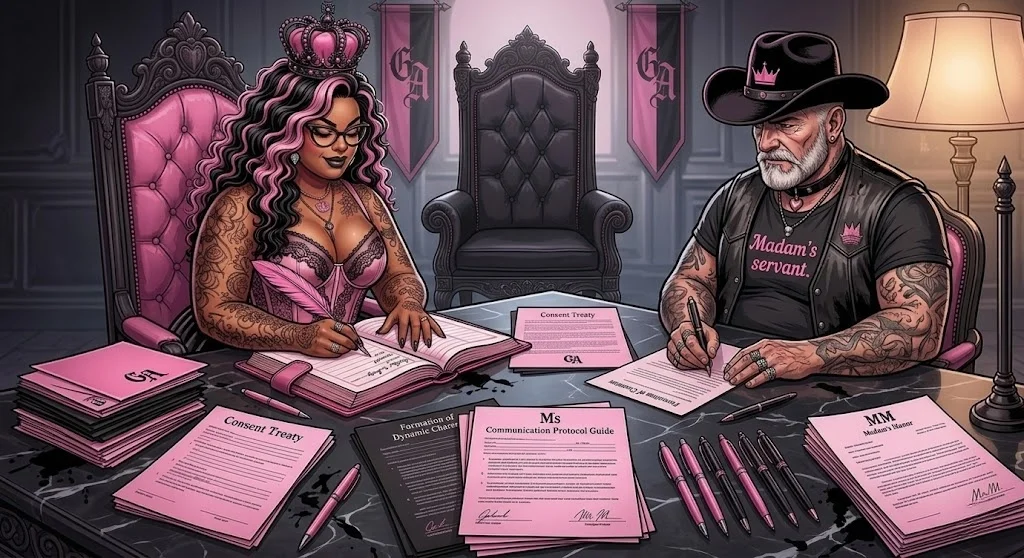
Today, we are diving into the intricate world of dynamic negotiations with our latest feature: Black, Pink, and Paperwork: The Art of Structured Communication.

Setting boundaries and establishing rules is a delicate balance of form and function. Navigating the fine print of a power exchange or outlining fresh guidelines doesn't have to be a clinical, lifeless process. It can be a high-contrast blend of authoritative structure and your signature aesthetic. The way you present your boundaries is just as impactful as the boundaries themselves. In our world, the sharp, unapologetic black of hard limits meets the vibrant, tailored pink of personalized desires—all bound together by the rigorous framework of paperwork.

Here is an inside look at how we navigate the boardroom of our dynamic, and the psychological weight behind the rules we live by.


The Madam’s POV: The Psychological Anchor

When we first formalized our dynamic, we crafted a comprehensive document—a central grimoire where our rules, protocols, rituals, and expectations are codified and kept strictly up to date. Everything within its pages was negotiated, with calculated compromises made on both sides.


A written document is far more than a chore chart; it is a psychological anchor. For my submissive, seeing the rules in stark black and white removes the anxiety of ambiguity. It answers the internal question of "How do I please her today?" before he even has to ask. For me, it is the tangible manifestation of authority. It solidifies that submission is not just a fleeting mood, but a structured, lived reality.


Rewiring the Mind Through Routine


When building the foundation of this contract, there were specific elements I was fiercely passionate about. At the forefront was orgasm denial—specifically, grueling, long-term denial and structured edging routines. I made it clear early on that this was non-negotiable. This wasn't just for my sexual gratification; it was about profound psychological rewiring.


A denied, heavily teased submissive exists in a heightened state of awareness. By acting as the sole gatekeeper of his release, I reroute his brain's dopamine-seeking behaviors. The desperation for physical climax transmutes into a desperate need for my approval. The result is a servant who is meticulously detail-oriented, hyper-attentive, flawlessly obedient, and deeply thoughtful.


I also outlined specific physical positions he must know, including when and how to utilize them. What started as one formal bow a day has escalated to a minimum of one to three, excluding any impromptu positions I demand. Muscle memory is incredibly powerful: when the body habitually lowers itself, the ego naturally follows.


Furthermore, I strictly regulated aspects of his well-being, like his caffeine intake. Total authority requires holistic ownership. Regulating his stimulants allows me to control his nervous system and energy spikes, reinforcing that his optimal health belongs to the Manor, not his passing whims.


The Art of Calculated Compromise


Authority without flexibility breeds resentment. During negotiations, we found middle grounds on:

  • Ruined orgasms versus full orgasms
  • Adjustments to physical positions to account for bodily limits
  • Required daily/weekly edging quotas
  • Permitted smoking frequency

In a dynamic, compromise is not a concession of power—it is calculated benevolence. A submissive who feels heard and safe is far more willing to surrender completely to the heavier, darker aspects of the dynamic. Finding compromise introduces a variable reward schedule into his psychology, keeping him eager and deeply invested. It requires intense communication to strike that perfect, moody balance where my authority remains absolute, but his fundamental limits are respected.


The Living Contract

Dynamics are not set in stone, they grow, change, and evolve. Every couple of months, we sit down, pull up the document, and dissect it. We refine, eliminate, and add. Beyond scheduled reviews, either of us can spontaneously bring a clause to the table. Stagnation is the death of passion, and scheduled renegotiations prevent silent resentments from festering. During these meetings, we operate under one strict understanding: words, wording, and specificity matter. Precise language eliminates loopholes, reduces anxiety, and ensures my expectations are crystal clear.


From the Desk of the Servant: The Living Ink


In Madam’s Manor, we talk a lot about the aesthetic—the beautiful contrast of black and pink. But beneath that visual elegance lies the functional foundation: the paperwork. If Madam is the architect of our dynamic, I am the lived-in reality of those walls. While She paints with bold strokes of authority, I am the one walking the corridors, finding the rhythm in her rules.


When Madam first approached me, it wasn’t with a thunderclap of total ownership. It started as an act of grace. She stepped into a space that wasn’t even hers to manage yet, offering structure to a submissive who was untethered and struggling. She honored a commitment that wasn't originally hers, building the very first layer of trust.


Back then, the paperwork was just a series of conversations about hard lines. But as our connection deepened, the "help" morphed into ownership. I remember asking early on if She utilized contracts. She was playfully modest, suggesting it wasn't exactly her style. Looking at the living, breathing document that governs our life today, it’s clear just how delightfully wrong she was.


The Evolution of the Leash


We didn’t tumble into a Total Power Exchange overnight. It was a deliberate, steady climb. By the time I finally pressed my leash into her hand, we had already weathered countless lists of kinks and debated the nuances of our terminology. We chose to start exactly as we intended to carry on, treating the foundation with the seriousness of a legal oath.


But the most important lesson I’ve learned? The ink on these pages is never truly dry.


Rules are not stone tablets. A dynamic that doesn’t change is one that has stopped growing. We’ve navigated shifts in our chemistry, adjustments to my caffeine intake, the evolving cadence of my bows, and delicate recalibrations of orgasmic protocols. Some rules that were once rigid have softened, while new, more complex structures have taken their place.


The Dance of Renegotiation


I find profound security in knowing our document is a conversation, not a cage. If a protocol chafes or a ritual loses its resonance, I can approach Madam with the truth. We sit down, review the text, and adjust. Admitting something isn't working isn't a failure—it is the very definition of success.


Conversely, when Madam introduces a new requirement, it isn't an arbitrary whim. It’s a calculated piece of our dance. We discuss the how and the why until its implementation feels as natural as breathing. A healthy dynamic is the art of balancing the black and the pink, the authority and the service, all held together by the quiet, steady hand of constant communication.


For those of you drafting your own rules, remember this: the paperwork is not the end goal. The goal is the person standing across from you. Use the pen to build a structure that honors both of you, and never be afraid to pick it up again to change the lines. The best dynamics are the ones that are still being written.


Forging Something Unbreakable


We highly recommend reevaluating your own dynamic documents every few months, or as often as the shifting tides of your relationship require. A successful negotiation happens when both sides' core needs, desires, and limits are addressed. Finding a balance you can both thrive in is challenging, especially in the high-contrast early days. Friction doesn't mean you are failing; it simply means the raw materials of your relationship require the heat of communication to forge something unbreakable.


Now, we turn the floor over to you: What is one rule or ritual in your own dynamic that started as a difficult negotiation, but has now become the most psychologically rewarding part of your connection?


Stay tuned and stay disciplined,

~Madam and Her Servant

3 months ago. Saturday, April 11, 2026 at 4:12 AM


The Sanctuary of the Manor: Mutual Care in a TPE Dynamic


From the Desk of Madam


The intersection of Total Power Exchange (TPE) and a Caregiver dynamic is often misunderstood. Some see TPE as a rigid, cold structure of commands and compliance, while others view caregiving as purely soft and indulgent. In reality, when these two forces merge, they create a seamless environment where authority and affection become one.


In a TPE dynamic, my responsibility is absolute. Every aspect of my servant’s life—his schedule, his health, his thoughts—falls under my purview. However, "Total Power" does not mean "Total Control" for the sake of ego. It means total responsibility for his well-being.


Integrating a Caregiver role into high protocol is about the intent behind the command. When I demand he stick to a strict sleep schedule or follow a specific meal plan, it is a display of my authority, yes—but it is also an act of care. I am maintaining my property. To rule effectively, I must ensure that what is mine is healthy, rested, and mentally sound. 


However, a true TPE dynamic is a living ecosystem, and my authority does not exist in a vacuum. While I hold the reins, my servant is simultaneously my partner and my caretaker. I can only pour so much of myself into this high-protocol dynamic because he is constantly pouring back into me. 


The balance lies in knowing when the "Goddess" needs to be stern to maintain order, and when the "Caregiver" needs to provide the soft place to land. It’s a rhythmic shift between the hand that holds the crop and the hand that strokes his hair. Both are expressions of my ownership, but they are sustained entirely by the reciprocal care he provides to me in return. 


From the Perspective of Her Servant

The Security of Submission

There is a profound sense of relief in TPE, but adding the Caregiver element transforms that relief into true safety. Under Madam’s high protocol, my day is structured by Her will. I don't have to wonder what is expected of me; the rules are the floor I walk on.


When She steps into Her Caregiver role, the dynamic reaches its peak. Being "looked after" doesn't diminish my role as a servant; it reinforces why I serve. Whether it’s through guided self-care or the simple comfort of being told I’ve done enough for the day, Her care provides the fuel I need to maintain the high standards She sets for the Manor. 


The TPE side provides the discipline I crave, while the Caregiver side provides the emotional sanctuary that makes that discipline sustainable—especially as we navigate the complexities of our current long-distance protocol and prepare for the next chapter of our lives together when that distance closes. 


In this dynamic, being "owned" means being "cared for." When I am overwhelmed or exhausted, the transition from strict protocol to gentle care is seamless. She knows when I need a firm command to snap me back into focus, and She knows when I need the quiet, nurturing presence of my Owner to remind me that I am safe in Her hands. 


But just as She protects me with Her power, I protect Her with my service. Caregiving in our dynamic is never one-sided. There are days when my most crucial duty is caring for Her wholly, stepping up as Her Partner to ensure She is nurtured, supported, and sustained. Anticipating what She needs before She has to ask, shouldering the weight of Her day, and actively nurturing the woman behind the titles—these are my ultimate acts of care. 


Finding Your Equilibrium


Balancing these roles requires a constant, silent dialogue. For those looking to integrate these dynamics, consider these four pillars:


Structure as Care: Recognize that rules and protocols are a form of care. They provide the submissive with a roadmap, reducing "decision fatigue" and creating a sense of belonging.

The Cycle of Reciprocity: Acknowledge that the submissive is also a caretaker. Allow space in the protocol for the servant to actively tend to the Dominant's physical and emotional needs. The energy given by the Owner must be replenished by the devotion and care of the partner.

The Aftercare Protocol: In a TPE dynamic, aftercare isn't just for scenes. It is a lifestyle. Incorporating "check-ins" within your protocol ensures that both the Dominant and the servant are aware of each other's limits and well-being.

The Language of Authority: Use your honorifics to signal shifts. A command given by "Madam" carries a different weight than a suggestion offered by "Daddy" or "Ma’am," allowing both partners to mentally shift between service, leadership, and being nurtured.


In the end, the balance isn't about doing "half TPE" and "half Caregiving." It’s about understanding that owning someone completely means caring for them completely, and that true service is a profound act of caregiving in return. When those forces align, the dynamic becomes more than just a set of rules—it becomes a sanctuary.


The Manor thrives because the discipline is rooted in love, and the care is rooted in authority. One cannot truly exist without the other.


Remember to come back next Saturday for O/our blog post about O/our TPE! 


Stay disciplined, stay curious, and keep your standards high. 


— Madam and Her servant