"Passion has overthrown tyrants and freed prisoners and slaves. Passion has brought justice where there was savagery. Passion has created freedom where there was nothing but fear. Passion has helped souls rise from the ashes of their horrible lives and build something better, stronger, more beautiful.”
It has been a while since I have been active online here, and I have truly missed it. I’ve also noticed that we have many newer people joining who are interested in learning more about the lifestyle.
Because of that, I’ve decided to start a new series for those who are just beginning their journey and want to better understand what the BDSM lifestyle truly is. We’ll explore how it differs from simply “being kinky,” discuss ways to keep yourself safe, identify healthy dynamics, recognize red flags, and cover many other important topics along the way.
I also welcome the perspectives of those who are veterans within the lifestyle. I am not — nor will I ever claim to be — the authority on BDSM. Truthfully, no one ever is. We are all constantly learning, evolving, and growing through experience.
One of the most beautiful aspects of this lifestyle is that it allows you to create the dynamic that works for you and your partner(s), as long as it is built on informed consent, communication, and mutual respect.
For those who are newer to the lifestyle, my hope is that this series will provide a solid starting point — a place where you can learn from people with years of experience, ask questions without judgment, and begin identifying what it is you truly want in a dynamic, no matter which side of the slash you fall on.
I also hope this becomes a place where people can learn to recognize warning signs and avoid the “wannabes,” social media “Insta-Doms/Dommes,” and predators who hide unhealthy intentions under the umbrella of BDSM.
I look forward to sharing the knowledge and experiences I’ve gathered over the past 25+ years with those who wish to follow along. If even one person gains something useful that helps them navigate their own journey more safely and confidently, then this series will have served its purpose.
What Is the BDSM Lifestyle — and How Is It Different Than Just Being “Kinky”?
A lot of people use the terms BDSM and kinky like they mean the exact same thing, but they really don’t. They overlap a lot, sure, but there’s usually a pretty big difference between someone who occasionally enjoys kinky things in the bedroom and someone who actively lives a BDSM lifestyle.
Neither one is “better” or “more real” than the other. They’re just different levels and styles of involvement.
So What Is BDSM?
BDSM is an umbrella term that covers several different categories:
Bondage & Discipline (B/D)
Dominance & Submission (D/s)
Sadism & Masochism (S/M)
Some people are into all of it. Some only connect with one piece of it.
For example:
Somebody might love rope bondage but hate pain.
Another person may love power exchange and obedience dynamics without any physical play at all.
Some people enjoy giving or receiving pain.
Others are more interested in service, structure, rituals, or psychological dynamics.
There’s no single “correct” way to practice BDSM.
At its core though, healthy BDSM is built around:
Consent
Communication
Trust Negotiated boundaries
Emotional awareness
Mutual respect
Contrary to what a lot of outsiders assume, ethical BDSM is not abuse. In fact, healthy BDSM relationships usually require more communication and honesty than many conventional relationships do.
This is why, for me personally, I live by the 4 Pillars of BDSM.
(I will expound on these in a later chapter)
Honesty
Trust
Communication
Respect
What Does “Kinky” Mean?
“Kinky” is a much broader and more casual term. Usually when someone says they’re kinky, they mean they enjoy things outside of completely vanilla sex.
That could include things like:
Spanking
Dirty talk
Roleplay
Light restraint
Fetishes
Power play
Sensory play
Exhibitionism
Fantasy scenarios
Some people are kinky once in a while just to spice things up. Others may have one or two specific fetishes they enjoy but have no interest in the BDSM community or lifestyle itself. That’s where the difference starts becoming important.
The Biggest Difference: Lifestyle vs Activity
For many kinky people, kink is something they do occasionally. For many BDSM practitioners, it becomes part of who they are and how they relate to others. That doesn’t necessarily mean somebody walks around in leather 24/7 barking orders at people. Most BDSM relationships look fairly normal from the outside. The difference is usually in the mindset and structure behind it.
For example:
A couple using handcuffs during sex once in a while might just consider it playful kink.
A Dominant/submissive couple may see restraint as part of a much deeper dynamic involving trust, authority, vulnerability, obedience, protection, service, or emotional connection.
The psychological side tends to run much deeper in lifestyle BDSM.
BDSM Isn’t Always About Sex!!
This is one of the biggest misconceptions people have. Yes, BDSM can absolutely involve sex, but for many people it goes far beyond that.
Depending on the individuals involved, BDSM can also involve:
Emotional intimacy
Stress relief
Rituals
Discipline
Service
Personal growth
Structure
Trust
Vulnerability
Psychological connection
Some dynamics are highly sexual. Others barely involve sex at all.
Some people are more interested in:
Protocols
Acts of service
Rules
Rituals
Caretaking dynamics
Psychological dominance/submission
Emotional surrender
For some, BDSM becomes more of a relationship framework than just bedroom activity.
Common Roles in BDSM
There are a lot of labels in the community, but some common ones are:
Dominant (Dom/Domme) Someone who consensually takes on authority, leadership, guidance, or control within a negotiated dynamic.
submissive (sub) Someone who consensually gives up some degree of control or authority within agreed boundaries.
Switch Someone who enjoys both Dominant and submissive roles depending on the partner, mood, or situation.
Top and Bottom These terms describe who is doing an action and who is receiving it during a scene.
Important distinction:
A Top is not automatically Dominant.
A Bottom is not automatically submissive.
For example, a masochist may fully control how they want pain delivered while technically “bottoming.”
BDSM Requires Communication Probably more than most people realize.
Healthy BDSM usually involves discussions about:
Boundaries
Hard limits
Soft limits
Safe words
Triggers
Medical concerns
Experience levels
Expectations
Aftercare
Emotional needs
A lot of people outside the lifestyle assume BDSM is reckless or dangerous, but experienced practitioners often spend a lot of time communicating beforehand. Honestly, many vanilla couples could probably learn something from that.
BDSM vs Abuse
This distinction matters a lot.
BDSM is:
Consensual
Negotiated
Communicated
Mutually desired
Revocable at any time
Abuse is:
Coercive
Manipulative
Fear-based
Non-consensual
Controlling without consent
The activity itself doesn’t determine whether something is ethical.
Consent does!!
A consensual impact play scene between trusting adults is not the same thing as domestic violence just because both involve spanking or restraint. Context matters. Communication matters. Consent matters.
Why Are People Drawn to BDSM? There’s no single answer. People come into BDSM for all kinds of reasons:
Curiosity
Exploration
Emotional connection
Trust
Stress relief
Fantasy
Identity
Personal growth
Psychological intimacy
Reclaiming control
Escapism
Structure and discipline
Sensation seeking
Some people try it once and move on. Others discover something that deeply resonates with them and realize it fits parts of themselves they never had language for before. There’s a Whole Spectrum. Not everybody in BDSM lives the same way.
On one end, you have people who occasionally experiment with kinky things during sex. On the other end, you have people whose relationships are deeply structured around Dominance/submission, service, rituals, protocols, or full-time power exchange dynamics.
Most people fall somewhere in between. And honestly, that’s perfectly normal.
Final Thoughts BDSM is a lot more nuanced than the stereotypes people usually see in movies, social media, or porn.
At its healthiest, it’s built on:
Trust
Consent
Communication
Emotional awareness
Mutual respect
Being kinky may simply mean enjoying things outside the mainstream.
Living a BDSM lifestyle usually means those dynamics become more intentional, more integrated, and more psychologically meaningful within a relationship or personal identity.
Neither approach is wrong.
They’re simply different ways people explore intimacy, power, vulnerability, connection, and human sexuality.
For many people, stepping into the BDSM lifestyle feels like opening a door into an entirely different world. There’s curiosity, excitement, nervousness, and usually a lot of misconceptions shaped by movies, social media, or pornography. The reality, however, is often very different from what people expect.
BDSM is not simply about whips, chains, dominance, or pain. At its core, the lifestyle is built on trust, communication, consent, connection, and exploration. For some, it becomes a meaningful form of self-expression. For others, it becomes a deeper way to connect emotionally and psychologically with partners.
If you are new to the lifestyle, here are some things you should realistically expect when entering the BDSM community.
Communication Becomes Everything
One of the first surprises most newcomers experience is just how much communication exists within BDSM. Healthy dynamics are not built on assumptions. They are built on conversations.
People talk about:
Boundaries
Comfort levels
Fantasies
Hard limits
Emotional triggers
Expectations
Aftercare
Safety concerns
In many cases, BDSM relationships involve more open and honest communication than traditional relationships ever do. Conversations that may feel awkward in other settings become normal and necessary here. You quickly learn that communication is not optional in BDSM —
it is one of the foundations that makes everything else possible.
Consent Is the Core of the Lifestyle
If there is one thing that defines healthy BDSM, it is consent. Consent in the lifestyle is intentional, informed, and ongoing. It is not assumed, and it is never permanent. People use concepts such as:
Safe, Sane, and Consensual (SSC)
Risk Aware Consensual Kink (RACK)
Personal Responsibility In Consensual Kink (PRICK)
These ideas reinforce the understanding that everyone involved has the right to make informed decisions about what they do and do not want. Safewords matter. Boundaries matter. Check-ins matter. A healthy Dominant respects limits. A healthy submissive communicates honestly. Mutual respect is what separates BDSM from abuse.
Real BDSM Is Not Like Porn!!
Many people enter the lifestyle expecting BDSM to look like what they have seen online. In reality, most healthy BDSM dynamics look nothing like pornography.
Porn often skips over:
Consent discussions
Negotiation
Safety planning
Emotional care
Relationship building
Trust development
Real BDSM usually involves patience, learning, awkward conversations, and gradual exploration. The strongest dynamics are rarely rushed. Trust takes time to build, and experienced people within the lifestyle understand that safety and emotional connection are often more important than intensity.
You Do Not Have to Label Yourself Immediately
Newcomers often feel pressure to figure out exactly who they are right away.
Am I dominant?
Am I submissive?
Am I a switch?
Am I into impact play, rope, primal play, or power exchange?
The truth is that most people evolve over time. What interests you today may change later. Some people discover they enjoy things they never expected, while others realize certain fantasies are better left as fantasies. Exploration is normal. Growth is normal. The lifestyle is not a test you must pass immediately.
The Emotional Side Can Be Intense
One thing many people do not expect is how emotional BDSM can become.
Scenes can create:
Deep vulnerability
Intense trust
Emotional release
Catharsis
Euphoria
Strong attachment
Unexpected emotional reactions
Some people experience altered emotional states often referred to as subspace or topspace. Others experience emotional lows afterward, commonly called “drop.” Because of this, emotional care matters just as much as physical safety. BDSM is often far more psychological than outsiders realize.
Aftercare Matters More Than People Think
Aftercare refers to the care given after a scene or intense interaction. While people often focus heavily on the scene itself, experienced practitioners know that what happens afterward can be equally important.
Aftercare may include:
Cuddling
Talking
Hydration
Reassurance
Quiet time
Physical comfort
Emotional grounding
Every person’s needs are different. Some want closeness and affection. Others need space and silence. Learning what you need — and what your partner needs — becomes part of building trust.
The Community Contains Both Good and Bad People
Like every community, BDSM contains both healthy individuals and unhealthy ones. Unfortunately, some people misuse titles like “Dom,” “Master,” or “Daddy” to manipulate inexperienced newcomers. Someone calling themselves dominant does not automatically make them safe, ethical, or experienced.
Be cautious of people who:
Ignore boundaries
Pressure you into fast commitment
Shame you for having limits
Claim safewords are unnecessary
Use BDSM as an excuse for controlling or abusive behavior
Healthy BDSM is consensual and respectful. Manipulation and coercion are not part of ethical kink. Trust should be earned, not demanded.
Education Is Extremely Important
The safest people in BDSM are usually the ones who never stop learning. The lifestyle involves both emotional and physical risks, depending on the activities involved. Good education helps people minimize harm and build healthier experiences.
Important areas of learning include:
Consent and negotiation
Anatomy and nerve safety
Emotional awareness
Risk management
Relationship dynamics
Communication skills
There is no shame in being inexperienced. Everyone starts somewhere. What matters is being willing to learn responsibly. You May Learn More About Yourself Than You Expected. For many people, BDSM becomes a journey of self-discovery as much as a relationship dynamic.
People often uncover things about:
Vulnerability
Trust
Confidence
Emotional needs
Control
Fear
Intimacy
Identity
Sometimes the lifestyle changes how people communicate in all areas of life, not just romantic relationships. Many discover that BDSM is not truly about pain, dominance, or submission alone. Often, it is about authenticity, honesty, and connection.
Final Thoughts
Entering the BDSM lifestyle can feel overwhelming at first, but it can also be incredibly rewarding when approached with patience, education, honesty, and self-awareness.
The healthiest dynamics are not built on fear or control alone. They are built on trust, communication, consent, respect, and mutual care.
You do not need to have everything figured out immediately. Take your time. Learn. Ask questions. Pay attention to how people treat others. Protect your boundaries. Most importantly, remember that healthy BDSM should make you feel respected, safe, heard, and valued — not pressured or diminished.
The lifestyle is not about becoming someone else. For many people, it is about finally becoming more fully themselves.
I would love to hear from others what they experienced coming into the Lifestyle. What you thought it was compared to what you have learned. Please feel free to share in the comments.
Most people are taught that relationships simply happen.
You meet someone. You feel chemistry. You spend time together. If everything goes well, love grows and the relationship develops naturally.
While attraction may happen naturally, healthy and lasting relationships rarely do.
Strong relationships are built consciously.
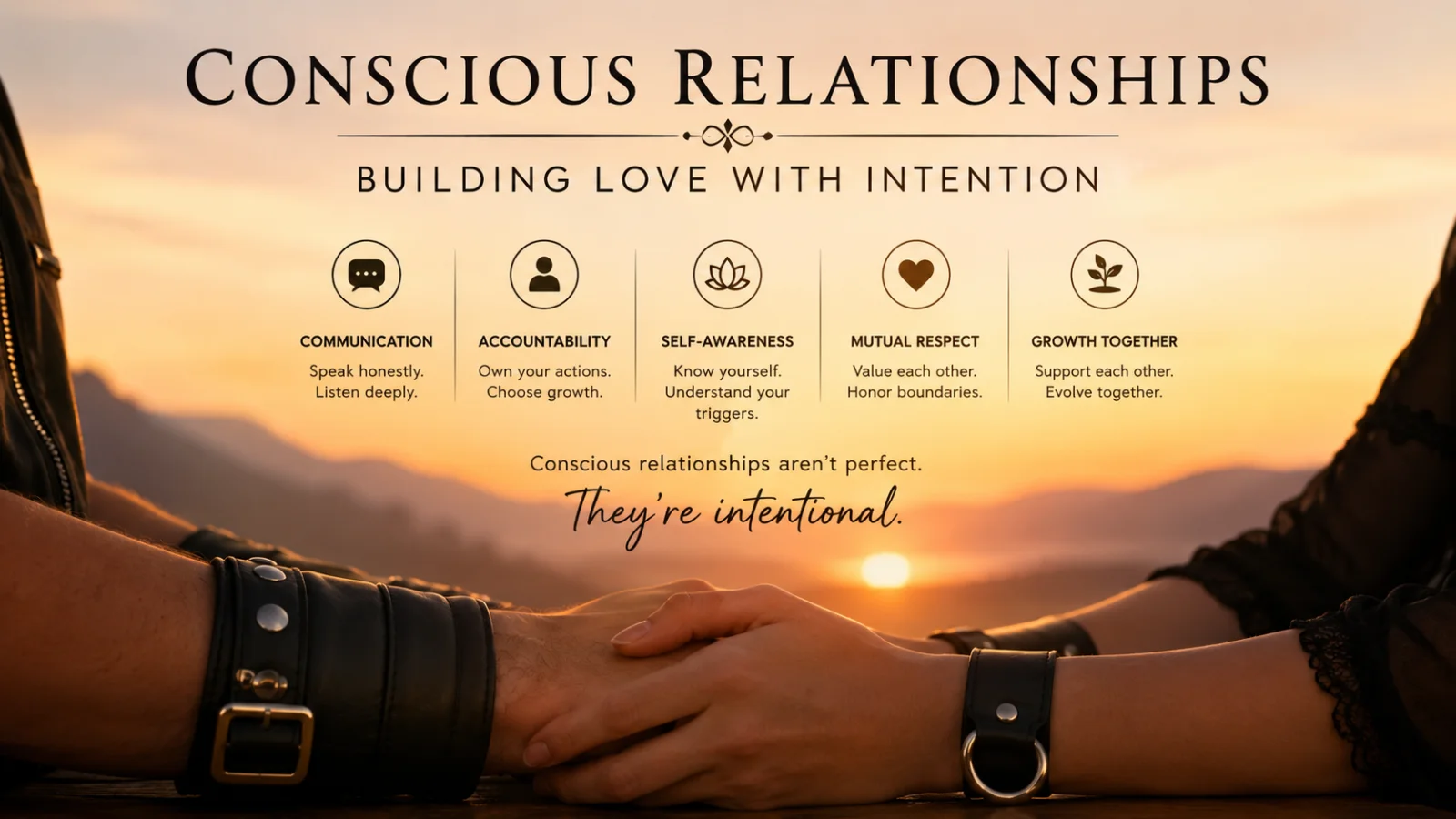
A conscious relationship is one in which both partners intentionally create the dynamic they want rather than simply reacting to circumstances as they arise. It is a relationship built on awareness, communication, accountability, and mutual growth.
Instead of asking, "What can I get from this relationship?" conscious partners ask, "What can we create together?"
What Is a Conscious Relationship?
A conscious relationship is not a perfect relationship.
Disagreements still happen. Mistakes are still made. Life still presents challenges.
The difference is that both partners choose to approach those challenges with awareness rather than avoidance.
Conscious partners understand that relationships are living systems that require care, attention, and regular maintenance.
They recognize that every interaction is an opportunity to either strengthen or weaken the connection they share.
Rather than blaming, shaming, or withdrawing, they seek understanding.
Rather than trying to win arguments, they work to solve problems.
Rather than expecting their partner to meet every need automatically, they communicate those needs clearly and respectfully.
The Pillars of Conscious Relationships
Communication
Communication is more than talking.
It is the ability to express needs, desires, fears, concerns, and expectations honestly.
Healthy communication requires both speaking and listening.
Many conflicts occur not because people disagree, but because they feel unheard.
Conscious partners listen to understand, not simply to respond.
Accountability
In unconscious relationships, mistakes often become opportunities for blame.
In conscious relationships, mistakes become opportunities for growth.
Accountability means taking ownership of your words, actions, and behaviors without making excuses.
It means being willing to say:
"I was wrong."
"I hurt you."
"How can I make this right?"
Accountability builds trust because it demonstrates emotional maturity.
Self-Awareness
Every person brings their own experiences, fears, wounds, and expectations into a relationship.
Conscious partners take responsibility for understanding themselves.
They examine their triggers.
They question their assumptions.
They recognize when past experiences are influencing present reactions.
The better we understand ourselves, the better we can understand our partners.
Mutual Respect
Respect is often confused with agreement.
The truth is that you can disagree with someone and still respect them.
Respect means valuing your partner's thoughts, feelings, boundaries, and autonomy.
It means recognizing that your partner is not an extension of yourself but an individual with their own needs and experiences.
Without respect, trust cannot thrive.
Conscious Relationships and Growth
One of the greatest gifts of a conscious relationship is growth.
Relationships act as mirrors.
They reveal our strengths, weaknesses, insecurities, and opportunities for improvement.
This can be uncomfortable.
Growth often requires vulnerability.
It requires examining patterns that no longer serve us.
It requires choosing courage over comfort.
Yet this is where the deepest intimacy develops.
When two people commit to growing together, they create a partnership capable of weathering life's inevitable challenges.
Conscious Relationships in D/s Dynamics
Conscious relationships are especially important within Dominant/submissive dynamics.
Contrary to common misconceptions, healthy power exchange requires more communication, not less.
Consent must be informed and ongoing.
Expectations must be discussed.
Boundaries must be respected.
Responsibilities must be understood by both parties.
A conscious D/s relationship is not about control for the sake of control.
It is about creating a dynamic that benefits both individuals while honoring their needs, desires, and goals.
The strongest dynamics are built upon trust, transparency, and intentionality.
Power exchange without consciousness becomes dangerous.
Power exchange with consciousness becomes transformative.
Daily Practices for a Conscious Relationship
Conscious relationships are built through consistent action.
Consider implementing:
Daily check-ins
Weekly relationship discussions
Honest conversations about needs and expectations
Expressions of gratitude
Conflict resolution focused on solutions
Shared goal setting
Intentional quality time
Small acts performed consistently often create greater results than grand gestures performed occasionally.
Final Thoughts
Love may bring two people together, but consciousness is what helps them stay connected.
A conscious relationship is not about perfection.
It is about intention.
It is about choosing each day to communicate, grow, listen, support, and love with awareness.
Whether you practice a traditional relationship, a D/s dynamic, a polyamorous structure, or any other form of consensual partnership, the principles remain the same.
People before protocol.
Trust before authority.
Consent before everything.
When two people commit to living those principles, they create something far more powerful than a relationship.
It is finally done, and I cannot believe that it is.
As you all know, I put the effort in to do the series for the past couple of weeks called:
The BDSM Lifestyle Explained
Just to clarify, I pulled a lot of that from past posts and elaborated on them which made it a bit easier. There was still a lot of newer content that I researched and put together along with my own personal experiences.
During that process, it was suggested that I turn that series into a book.
I talked with Hekate about it and made the decision to do it.
I spent countless days and nights pulling together more material and compiling it into book format.
The original manuscript was completed and I sent it out to a few people I trust to read it.
I have made a couple of edits to it and it is done after staying up all night.
It has gone into review and am awaiting the final okay.
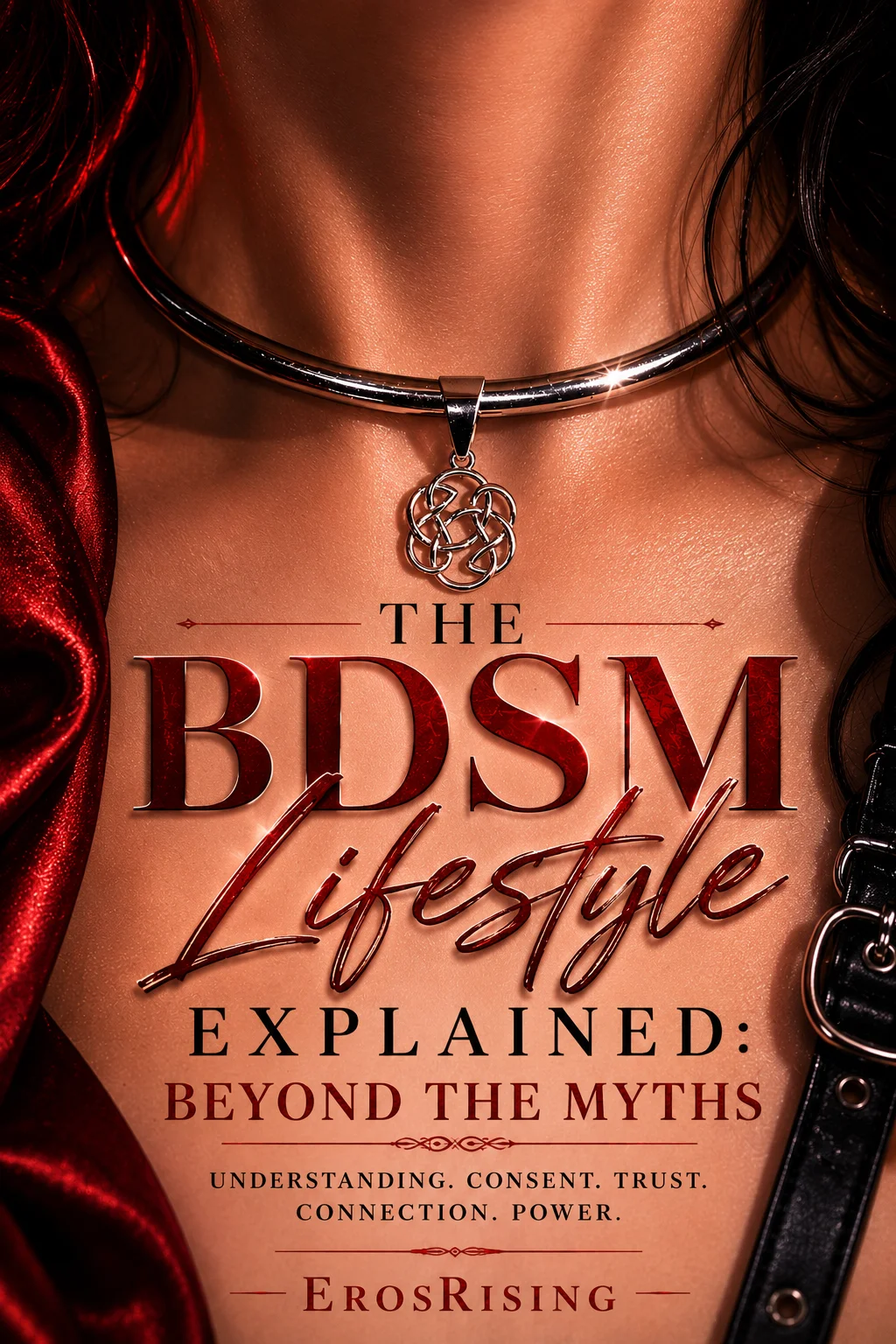
I have also finished the cover which I will share here.
I am not trying to promote sales
I just simply wanted to share this and say thank you to all of those that gave me encouragement to get it done.
You all know who you are.
With that being said, Hekate was the model for the cover with her Formal collar on.
So here is the first look at the book cover!!
Again, I want to thank each and every one of you for your encouragement and support.
If there is one lesson that emerges repeatedly throughout this series, it is that BDSM is far more complex—and far more human—than the stereotypes often portrayed by popular culture. It is not defined by leather, chains, collars, whips, or titles. Those things may have meaning, but they are not the foundation.
The true foundation of BDSM is built upon trust, honesty, communication, respect, accountability, education, and consent. The healthiest dynamics are not measured by how much authority a Dominant possesses or how deeply a submissive surrenders. They are measured by the quality of the relationship that exists beneath the power exchange.
Throughout this series, we have explored:
Understanding the difference between kink and lifestyle BDSM
Entering the community safely
Recognizing predators and unhealthy behavior
Building communication and compatibility
Establishing trust through the Four Pillars
Using checklists and negotiation tools
Creating contracts and agreements
Understanding shared responsibility within scenes
Appreciating the deeper symbolism of the collar
What becomes clear is that BDSM is not a destination.
It is a journey.
A journey of learning.
A journey of self-discovery.
A journey of vulnerability.
A journey of trust.
For some, that journey leads to casual exploration.
For others, it develops into a deeply meaningful power exchange relationship.
There is no single path.
There is no single way to be Dominant.
There is no single way to be submissive.
There is no single way to practice BDSM.
What matters is that the journey is built on informed consent, mutual respect, personal responsibility, and authentic connection.
Take your time.
Continue learning.
Ask questions.
Protect your boundaries.
Respect the boundaries of others.
Never stop communicating.
And remember that the most powerful force in BDSM is not dominance, submission, pain, restraint, or control.
It is trust.
Because without trust, power exchange cannot exist.
But with trust, communication, honesty, respect, and consent, BDSM can become a profound expression of intimacy, vulnerability, personal growth, and human connection.
The lifestyle is not about becoming someone else. At its best, it is about becoming more fully yourself.
Thank you to everyone that has come along on this journey. I appreciate each and every single one of you. This is now in the process of being converted into a book with a companion workbook that will hopefully reach and assist others in their journeys. much love to all The Cage community.
Among all the symbols found within the BDSM lifestyle, few carry as much emotional weight and significance as the collar. For those outside the community, a collar may appear to be little more than a fashion accessory, a costume piece, or a tool used during play. Popular media often reduces collars to symbols of ownership or control, stripping away the depth and meaning they hold for many people who live within the lifestyle. The truth is far more complex.
For many practitioners of BDSM, a collar represents trust, commitment, responsibility, devotion, connection, and intentionality. It is not the leather, metal, or material that gives a collar its value. Rather, it is the meaning attached to it by the person wearing it and the relationship it represents. Like a wedding ring, a collar is ultimately a symbol. Its importance comes not from what it is, but from what it means.
Understanding the Symbolism of the Collar
The collar has existed in BDSM culture for decades and has evolved into one of the most recognizable symbols of power exchange relationships. However, unlike many mainstream relationship symbols, there is no universal meaning attached to a collar. Every dynamic, every relationship, and every individual may assign their own significance to it.
For some, a collar represents:
Trust
Commitment
Devotion
Service
Accountability
Protection
Personal growth
Power exchange
Identity within the BDSM community
For others, the collar serves as a daily reminder of promises made, responsibilities accepted, or values chosen. What remains consistent across most interpretations is that a collar symbolizes intentionality. It represents a conscious choice rather than an obligation. A collar is not something imposed upon someone. In healthy BDSM relationships, it is accepted freely and enthusiastically.
The Foundation of Every Collar: Consent
Before discussing collaring traditions, it is important to understand a fundamental truth: A collar means nothing without consent.
The BDSM community is built upon principles such as SSC (Safe, Sane, and Consensual), RACK (Risk-Aware Consensual Kink), and PRICK (Personal Responsibility In Consensual Kink). Under all of these frameworks, consent remains central. A collar should never be used as a means of coercion, manipulation, control, or emotional pressure. No one is obligated to wear a collar, accept a collar, or remain collared.
Consent is not a one-time event. It is ongoing, informed, and revocable.
The healthiest dynamics recognize that every day a submissive chooses to continue wearing a collar is a renewed act of consent and trust. Likewise, every day a Dominant accepts that trust is a renewed commitment to lead responsibly.
The Journey Toward a Collar
Many newcomers mistakenly believe that receiving a collar is the goal of BDSM. In reality, the collar is often a milestone rather than a destination.
Healthy collaring relationships are typically built over time through:
Honest communication
Negotiation
Shared experiences
Conflict resolution
Vulnerability
Consistency
Trust-building
Before a collar is exchanged, partners often spend weeks, months, or even years learning about one another.
They discuss:
Hard and soft limits
Relationship expectations
Long-term goals
Communication styles
Sexual interests
Power exchange preferences
Emotional needs
Conflict resolution methods
The stronger the foundation beneath the collar, the stronger the collar's meaning becomes. Trust cannot be rushed. Neither should collaring.
Different Types of Collars
The BDSM community recognizes several different types of collars, each carrying its own meaning and purpose.
Play Collars
A play collar is generally worn only during BDSM scenes. Its purpose is often psychological rather than relational. It helps establish roles, create immersion, and reinforce the dynamic during the scene. For many people, putting on the collar signifies entering scene space. Removing it signals a return to everyday life.
Training Collars
A training collar is often used when a dynamic is developing. This period allows both Dominant and submissive to learn about one another while building trust and evaluating compatibility. A training collar does not necessarily imply permanence. Instead, it signifies a period of exploration, learning, and growth.
Day Collars
Day collars allow individuals to carry the symbolism of their dynamic into everyday life. Because traditional collars may not be practical in public or professional environments, day collars are often designed to be discreet.
Examples include:
Necklaces
Bracelets
Rings
Anklets
Custom jewelry
To outside observers, these pieces may appear decorative. To the wearer, however, they often hold deep personal significance.
Formal Collars
For many people, a formal collar represents the highest level of commitment within a D/s relationship. Some couples view formal collaring ceremonies similarly to engagements or marriages.
The formal collar often symbolizes:
Long-term commitment
Deep trust
Mutual devotion
Shared responsibility
Established power exchange
While not every D/s relationship includes a formal collar, those who choose this path often view it as one of the most significant milestones in their dynamic.
Self-Collaring: A Commitment to Yourself
One of the fastest-growing discussions within modern BDSM communities involves self-collaring. Traditionally, collars were exchanged between Dominants and submissives. However, many people have begun embracing self-collaring as a meaningful practice in its own right.
A self-collar is placed by the individual wearing it rather than gifted by another person.
For some, self-collaring represents a period of self-discovery.
For others, it symbolizes:
Self-discipline
Personal accountability
Healing
Growth
Self-respect
Independence
Identity within the lifestyle
Some people self-collar while they learn about BDSM before entering a dynamic. Others choose self-collaring because they are not actively seeking a Dominant. Some remain self-collared permanently. Contrary to common misconceptions, self-collaring is not about pretending to belong to someone. Instead, it is about belonging to yourself.
It is a conscious commitment to growth, integrity, and authenticity. In many ways, self-collaring can be viewed as the ultimate expression of personal accountability.
The Responsibilities Behind the Collar
One of the greatest myths surrounding collars is that they grant power without responsibility. The reality is exactly the opposite. The deeper the commitment represented by a collar, the greater the responsibilities attached to it.
Responsibilities of the Submissive
A collared submissive may choose to:
Communicate honestly
Respect negotiated agreements
Express concerns openly
Maintain accountability
Continue practicing consent
Pursue personal growth
Submission is not passive obedience. Healthy submission requires active participation, self-awareness, and communication.
Responsibilities of the Dominant
Placing a collar often comes with significant responsibility.
A Dominant may commit to:
Protecting physical safety
Protecting emotional wellbeing
Maintaining trust
Providing guidance
Respecting limits
Remaining accountable
Supporting growth
Authority without accountability is not Dominance. It is simply control. Healthy Dominance recognizes that leadership is a responsibility, not a privilege.
Responsibilities of the Self-Collared Individual
Self-collared individuals assume responsibility for themselves.
This often includes:
Setting personal standards
Following through on commitments
Continuing education
Practicing self-discipline
Honoring personal values
Maintaining integrity
Without an external authority figure, self-collared individuals become responsible for holding themselves accountable to the promises they have made.
Collaring Ceremonies
Many people choose to celebrate formal collaring with ceremonies. These ceremonies can range from private exchanges between partners to elaborate events attended by friends, family, or members of the BDSM community.
A collaring ceremony may include:
Vows
Promises
Rituals
Exchange of collars
Community recognition
Celebrations
Some couples compare their collaring ceremony to a wedding. Others prefer a quiet and deeply personal experience. Neither approach is more valid than the other. The meaning comes from the people involved.
When a Collar Comes Off
Because collars often carry significant emotional meaning, removing one can be difficult. Relationships evolve. People change. Dynamics shift.
Sometimes collars are removed because:
A relationship has ended
Trust has been broken
Goals have changed
Growth has taken partners in different directions
While these experiences can be painful, removing a collar does not diminish the value of what came before. Every relationship teaches lessons. Every dynamic contributes to growth.
The healthiest members of the community understand that endings deserve dignity, respect, and compassion.
Final Thoughts
The collar remains one of the most powerful symbols within the BDSM lifestyle.
Whether it is worn during a scene, exchanged within a long-term D/s relationship, displayed as a discreet day collar, or chosen as part of a self-collaring journey, its meaning comes from intention rather than appearance.
A collar is not about ownership.
It is not about control.
It is not about status.
At its best, a collar represents trust freely given, responsibility willingly accepted, and commitment consciously chosen.
Ultimately, the true value of a collar is not found in leather, steel, rope, or silver. It is found in the trust that allows it to be worn, the consent that gives it meaning, and the relationships—both with others and with oneself—that it symbolizes.
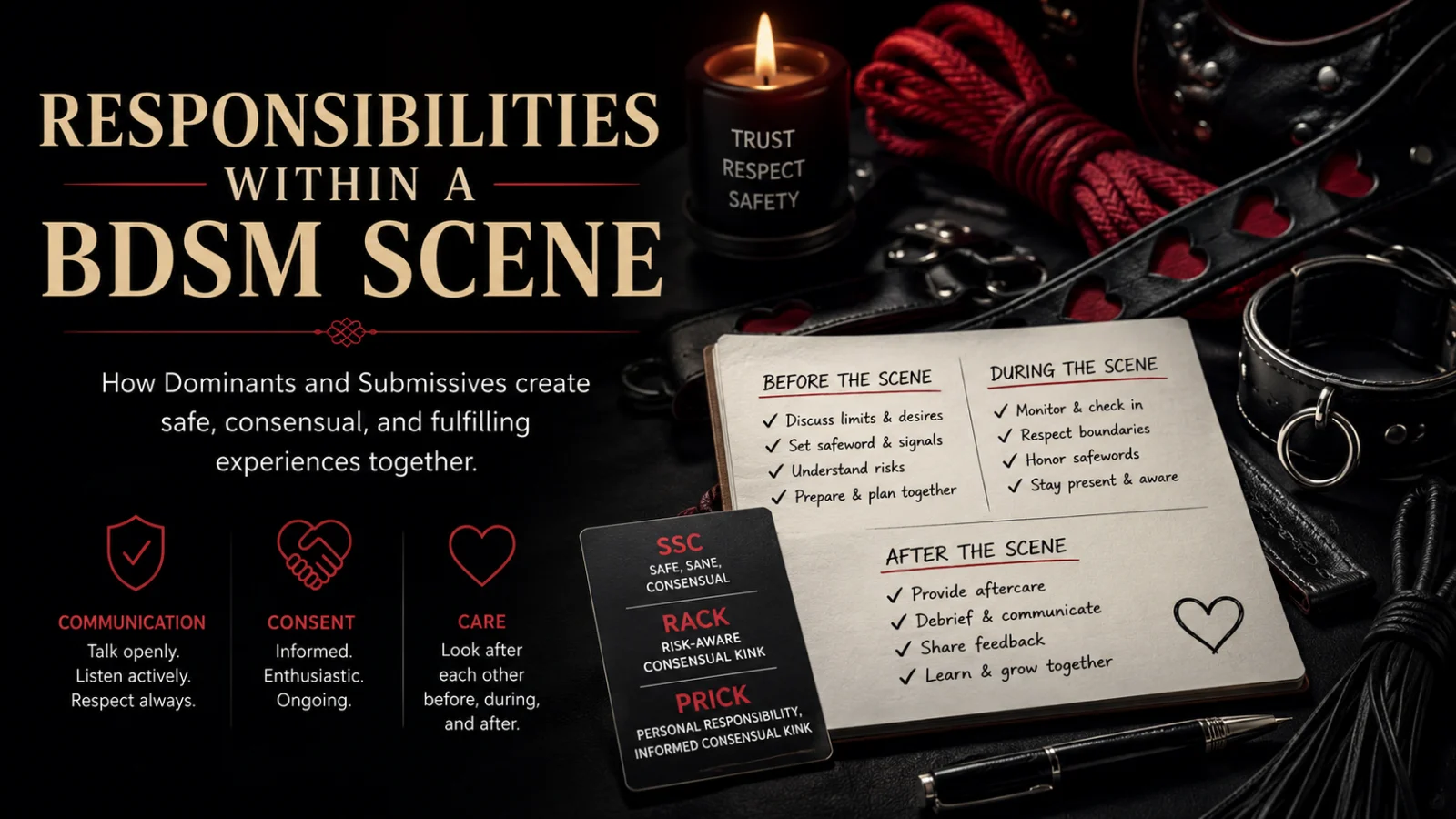
One of the most common misconceptions about BDSM is that the Dominant holds all the responsibility while the submissive simply follows. In reality, healthy BDSM dynamics require active participation, communication, and accountability from everyone involved. Whether you're engaging in a simple impact play scene, a rope session, or a complex power exchange dynamic, both partners share responsibility for creating a safe, consensual, and fulfilling experience. The foundation of every successful scene rests upon trust, communication, and informed consent.
Understanding the Shared Responsibility of BDSM
A BDSM scene is not something one person does to another. It is something two (or more) consenting adults create together. The Dominant may direct the experience, and the submissive may surrender varying degrees of control, but both individuals remain responsible for maintaining safety, respecting boundaries, and communicating honestly. This shared responsibility is reflected in several core philosophies commonly embraced within the BDSM community.
SSC: Safe, Sane, and Consensual: One of the oldest and most widely recognized frameworks in BDSM is SSC.
Safe Participants take reasonable precautions to minimize physical and emotional risks.
Sane All participants are capable of making informed decisions and understand the activities involved.
Consensual Everyone freely agrees to participate without coercion, manipulation, or pressure. SSC reminds us that consent and safety are the foundation upon which all BDSM activities are built.
RACK: Risk-Aware Consensual Kink: As the BDSM community evolved, many practitioners adopted RACK as a more realistic framework. RACK acknowledges that no activity is completely without risk.
Instead of pretending activities are entirely safe, participants:
Understand the risks involved.
Educate themselves about those risks.
Accept those risks knowingly.
Provide informed consent.
RACK emphasizes personal responsibility and informed decision-making.
PRICK: Personal Responsibility In Consensual Kink: PRICK expands upon RACK by placing greater emphasis on individual accountability.
Under PRICK:
Participants educate themselves.
Participants disclose relevant information.
Participants take ownership of their decisions.
Consent is based on accurate information and understanding.
PRICK reminds everyone that personal responsibility cannot be delegated simply because a power exchange exists.
Even within the most intense Dominant/submissive dynamic, each person remains responsible for communicating honestly and making informed choices.
Consent: The Foundation of Every BDSM Scene
Before discussing the responsibilities of Dominants and submissives, it is important to understand the concept that makes ethical BDSM possible: consent.
Consent is the voluntary, informed, and ongoing agreement to participate in specific activities, dynamics, or relationships. It is the cornerstone of healthy BDSM and separates ethical power exchange from abuse.
Despite common misconceptions, BDSM is not about one person taking power from another. It is about individuals voluntarily choosing how power will be exchanged within clearly negotiated boundaries.
What Makes Consent Valid? - Informed Consent
Consent can only be meaningful when all participants understand:
The activities being proposed
The potential risks involved
The physical and emotional effects that may occur
The expectations of everyone involved
Honesty and transparency are essential. Important information should never be withheld from a partner.
Freely Given Consent
Consent must be given without:
Pressure
Manipulation
Threats
Coercion
Fear of consequences
A person should always feel safe saying "no."
Specific Consent: Consent is activity-specific. Agreeing to one activity does not automatically mean agreeing to another.
For example:
Agreeing to impact play does not mean agreeing to bondage.
Agreeing to a scene tonight does not mean agreeing to future scenes.
Agreeing to a relationship does not mean agreeing to every request.
Assumptions have no place in healthy BDSM dynamics.
Ongoing Consent: Consent is not a contract signed once and forgotten.
Participants have the right to:
Change their minds
Adjust boundaries
Pause an activity
End a scene entirely
This is why safewords and regular check-ins are so important.
Enthusiastic Consent: Many modern BDSM practitioners embrace the concept of enthusiastic consent. Rather than looking for the absence of a "no," they look for the presence of a genuine and enthusiastic "yes." The goal is not merely participation—it is willing participation.
Consent and Power Exchange: One of the most important concepts for newcomers to understand is that submission does not eliminate consent.
Even within:
Dominant/submissive (D/s)
Master/slave (M/s)
Owner/property dynamics
24/7 power exchange relationships
Consent remains the foundation. A submissive may choose to surrender authority, but they do not surrender ownership of their body, mind, or personal autonomy. The ability to withdraw consent remains intact.
How Consent Relates to SSC, RACK, and PRICK
The philosophies discussed earlier all place consent at their core.
SSC (Safe, Sane, and Consensual) emphasizes that activities should be conducted safely, by capable participants, with clear consent.
RACK (Risk-Aware Consensual Kink) recognizes that some BDSM activities involve inherent risks and that participants knowingly accept those risks through informed consent.
PRICK (Personal Responsibility In Consensual Kink) emphasizes that every participant is responsible for educating themselves, understanding risks, and making informed choices.
Although these frameworks differ in their approach, they all agree on one fundamental truth:
Without consent, BDSM ceases to be BDSM.
Dominant Responsibilities
Before the Scene: A Dominant's responsibilities begin long before the scene starts.
They should:
Discuss limits and boundaries.
Establish safewords and safe signals.
Understand medical or emotional concerns.
Prepare equipment properly.
Learn the skills necessary for planned activities.
A responsible Dominant never assumes they know what a submissive wants without discussion.
During the Scene
While the scene is active, the Dominant should:
Monitor physical and emotional well-being.
Watch for non-verbal distress signals.
Respect negotiated boundaries.
Honor safewords immediately.
Maintain control without becoming reckless.
End the scene if needed!!
Authority does not eliminate responsibility. In fact, it increases it.
After the Scene: Aftercare is often one of the most important parts of a BDSM experience.
Depending on the individuals involved, aftercare may include:
Physical comfort
Reassurance
Food or hydration
Blankets or warmth
Emotional support
Quiet connection
A Dominant should also encourage discussion about the scene and remain open to feedback.
Submissive Responsibilities
Before the Scene: A submissive's responsibility begins with honesty
This includes:
Communicating limits clearly.
Discussing fears and concerns.
Disclosing relevant medical issues.
Avoiding the temptation to agree simply to please someone.
Consent is meaningful only when it is informed and voluntary.
During the Scene
A submissive should:
Communicate when something is wrong.
Use safewords when necessary.
Remain aware of their own physical condition.
Follow negotiated protocols.
Submission does not mean surrendering responsibility for personal safety.
After the Scene
Following a scene, submissives should:
Communicate aftercare needs.
Share emotional reactions.
Discuss what worked well.
Identify any concerns honestly.
Constructive feedback strengthens future scenes and deepens trust.
The Importance of Communication
No amount of experience can replace communication. Many BDSM accidents occur not because someone intended harm, but because assumptions replaced conversation.
Healthy partners discuss:
Limits
Expectations
Goals
Triggers
Health concerns
Emotional needs
Aftercare preferences
Communication should happen before, during, and after every scene.
Final Thoughts
Power exchange does not remove responsibility—it redistributes authority within clearly negotiated boundaries.
Whether you follow SSC, RACK, PRICK, or a combination of these philosophies, the underlying principles remain the same:
Consent must be informed.
Communication must be ongoing.
Boundaries must be respected.
Safety should be prioritized.
Trust must be earned and maintained.
The strongest BDSM relationships are not built on control alone. They are built on mutual respect, accountability, communication, and a shared commitment to creating experiences that are safe, meaningful, and fulfilling for everyone involved.
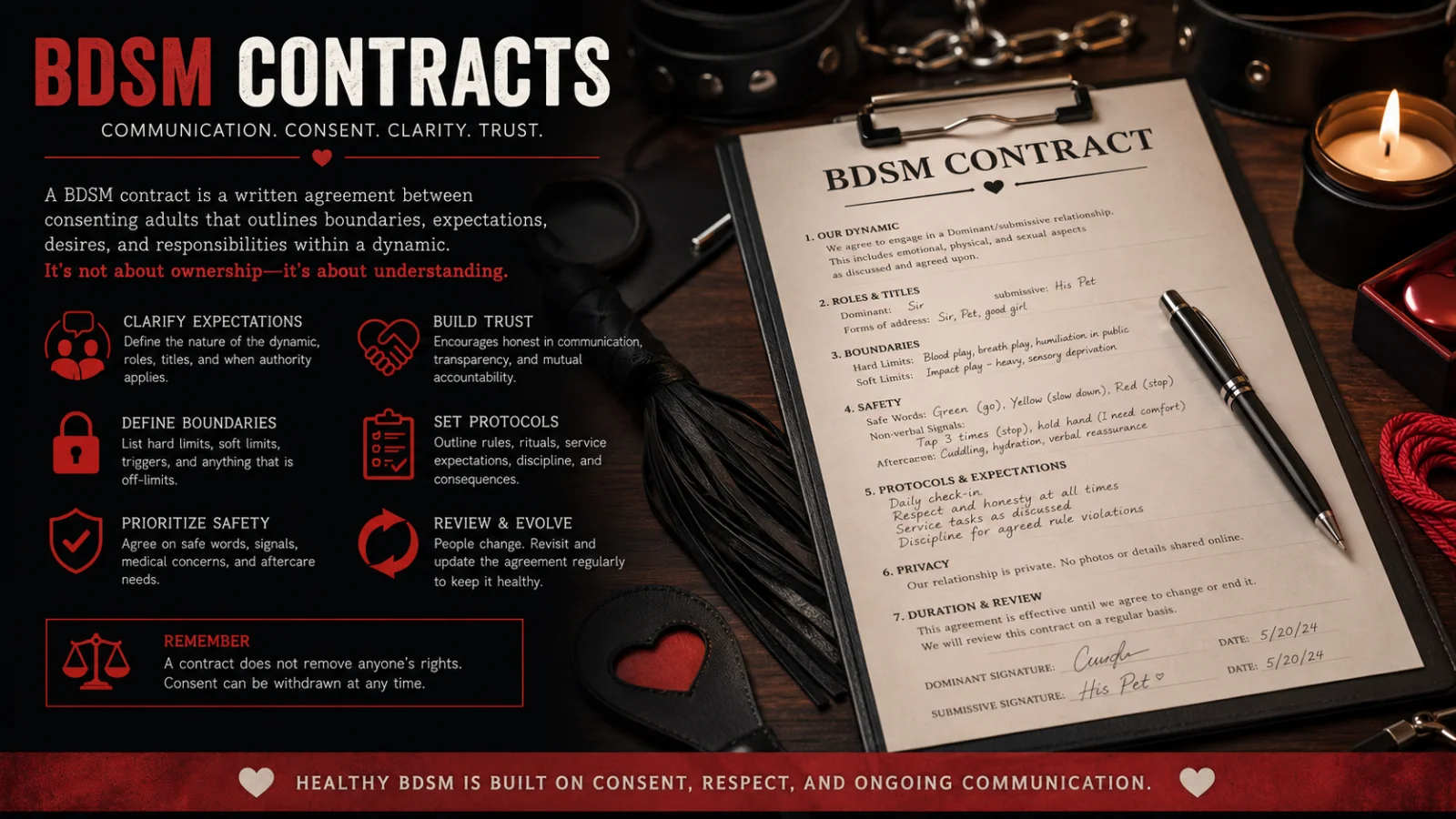
In the world of BDSM, communication is everything. While movies and media often portray BDSM as spontaneous, mysterious, or dangerous, healthy BDSM relationships are usually built on something far less dramatic but far more important: clear expectations, informed consent, and ongoing communication. One of the tools many people use to support that communication is the BDSM contract.
A BDSM contract is not about ownership in a literal legal sense. Instead, it is a negotiated agreement between consenting adults that outlines boundaries, expectations, desires, responsibilities, and consent within a BDSM dynamic.
For some, contracts are symbolic and romantic. For others, they are practical tools for structure and accountability. Whether a dynamic is casual, long-term, lifestyle-based, or purely scene-oriented, contracts can help create clarity and trust.
What Is a BDSM Contract?
A BDSM contract is a written agreement between participants in a BDSM relationship or dynamic. It can range from a simple checklist of likes and limits to a detailed multi-page agreement outlining protocols, rules, responsibilities, punishments, rituals, and emotional expectations.
Contracts may be used in:
Dominant/submissive (D/s) relationships
Master/slave dynamics
Owner/property relationships
Service dynamics
Daddy/Mommy dynamics
Sadomasochistic play partnerships
Casual play arrangements
Long-term lifestyle relationships
The purpose is not to “sign away rights,” but to create mutual understanding.
At its core, a BDSM contract is about:
Consent
Negotiation
Transparency
Accountability
Emotional safety
Shared expectations
Are BDSM Contracts Legally Binding?
In most places, BDSM contracts are generally not legally enforceable in the way employment or business contracts are.
A contract cannot:
Remove someone’s legal rights
Eliminate the need for consent
Permit abuse
Override criminal law
Force someone to remain in a relationship
Prevent someone from revoking consent
Consent can be withdrawn at any time.
Because of this, BDSM contracts are usually viewed as:
Personal agreements
Relationship frameworks
Communication tools
Symbolic commitments
Their real value is not legal enforcement — it is the conversations that happen while creating them.
Why People Use BDSM Contracts
1. Clarifying Expectations People often enter dynamics with different assumptions.
One person may view the relationship as: 24/7 authority exchange
This creates safer and more informed interactions.
3. Creating Emotional Safety For many submissives, knowing expectations reduces anxiety.
For many Dominants, structure helps them lead responsibly.
Contracts can provide:
Stability
Predictability
Reassurance
Clarity during conflict
This becomes especially important in power exchange relationships where emotions can run deep.
4. Encouraging Honest Communication Negotiating a contract forces people to discuss subjects they might otherwise avoid:
Jealousy
Monogamy
Punishment
Sexual health
Living arrangements
Public disclosure
Relationship hierarchy
Expectations outside scenes
These conversations are often more important than the contract itself.
Common Sections in a BDSM Contract
Every contract is different, but many include similar categories.
Identification of the Dynamic: This defines the nature of the relationship.
Examples:
Casual play partners
24/7 D/s
Master/slave dynamic
Service-oriented relationship
Online-only dynamic
Roles and Titles
Some contracts define titles and forms of address.
Examples:
Sir
Ma’am
Master
Mistress
Daddy
Mommy
Pet
submissive
slave
These titles may apply:
Always
Only in private
Only during scenes
Hard Limits: Hard limits are activities that are completely off-limits.
Examples may include:
Blood play
Humiliation
Breath play
Public exposure
Financial control
Sexual activities
Certain physical impacts
These are non-negotiable boundaries.
Soft Limits: Soft limits are activities that may be explored cautiously under certain conditions.
These often require:
Extra trust
More experience
Ongoing discussion
Safe Words and Safety Signals: Most healthy BDSM dynamics include safe words.
Common systems include the Traffic Light System.
Green = good
Yellow = slow down/check in
Red = stop immediately
Nonverbal signals may also be included for:
Gags
Panic responses
Nonverbal states
Rules and Protocols
Some contracts outline behavioral expectations.
Examples:
Daily check-ins
Manners or etiquette
Rituals
Service tasks
Clothing expectations
Sleep protocols
Communication standards
In lifestyle dynamics, protocols may become part of daily life.
Punishments and Discipline
Some D/s relationships include agreed-upon consequences for rule violations.
Healthy discipline should:
Be negotiated
Be consensual
Avoid real harm
Never become abuse
Punishment is not an excuse for cruelty, manipulation, or uncontrolled anger.
Sexual Health Agreements
This section may cover:
STI testing
Barrier use
Monogamy
Fluid bonding
Disclosure requirements
Honesty is critical.
Privacy and Confidentiality
Many people in BDSM value discretion.
Contracts may address:
Photography
Online posting
Real-name privacy
Community disclosure
Social media boundaries
Duration and Review
Some contracts last:
One scene
A weekend
Several months
Indefinitely
Many include scheduled reviews.
People change. Relationships evolve. Contracts should evolve too.
Scene Contracts vs Lifestyle Contracts
Scene Contracts: These are temporary agreements focused on a single encounter or event.
They usually cover:
Activities
Limits
Safety
Aftercare
These are common between newer partners.
Lifestyle Contracts: These govern ongoing relationships and power exchange dynamics.
They may include:
Daily rituals
Service expectations
Household structure
Emotional responsibilities
Long-term goals
These tend to be far more detailed.
Contracts Should Never Replace Consent
One of the biggest misconceptions in BDSM is that a contract gives permanent permission.
It does not.
Consent must remain:
Informed
Ongoing
Freely given
Revocable
Even in intense power exchange relationships, consent still matters at every stage.
A submissive can say no.
A Dominant can stop a scene.
Either person can renegotiate or leave the relationship.
Healthy BDSM depends on mutual respect — not coercion.
Red Flags Around BDSM Contracts
Contracts can become unhealthy when used manipulatively.
Be cautious if someone:
Demands a contract immediately
Uses contracts to isolate you
Claims ownership removes your rights
Discourages outside support systems
Refuses negotiation
Punishes boundary-setting
Says “real submissives don’t need limits”
Treats consent as permanent
Healthy Dominants understand that trust must be earned.
Contracts as Living Documents
Many experienced practitioners view BDSM contracts as evolving agreements rather than rigid rules.
Over time:
Interests change
Comfort levels shift
Relationships deepen
Limits evolve
Life circumstances change
Good communication means revisiting agreements regularly.
A contract should grow with the relationship.
Final Thoughts
BDSM contracts are not about control through paperwork. They are about intentional communication, negotiated consent, and building trust through clarity.
A well-written contract can:
Prevent misunderstandings
Strengthen communication
Increase emotional safety
Help partners explore BDSM responsibly
The strongest BDSM dynamics are not built on fear or blind obedience. They are built on honesty, mutual respect, and the understanding that power exchange only works when everyone involved feels safe, heard, and valued.
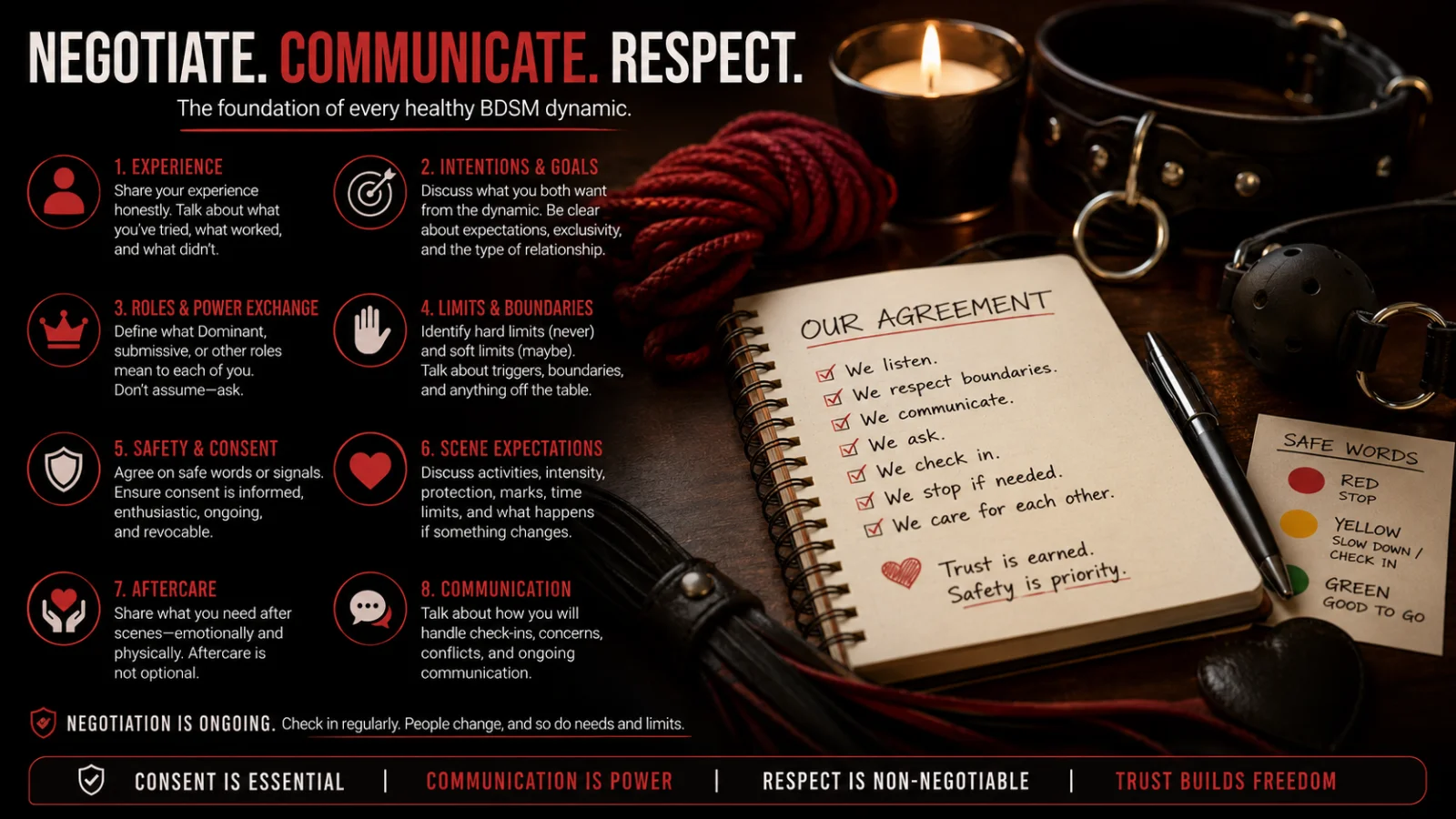
One of the most important parts of BDSM is negotiation. Before any collars are placed, scenes begin, or power is exchanged, both people should understand what they want, what they do not want, and what the relationship will look like moving forward.
Negotiation is not just about limits. It is about building trust, setting expectations, and creating a foundation where everyone involved feels respected, informed, and emotionally safe.
A healthy BDSM dynamic is not created through assumptions. It is created through honest communication.
What Is a BDSM Dynamic?
A dynamic is the structure of interaction between people within BDSM. It defines how power, responsibility, authority, care, submission, dominance, service, discipline, intimacy, or play will function between partners.
Dynamics can be:
Casual or deeply committed
Sexual, emotional, psychological, or service-based
Temporary scenes or full-time lifestyles
Equal outside scenes or power exchange at all times
Romantic or non-romantic
Examples include:
Dominant/submissive (D/s)
Master/slave (M/s)
Daddy/Mommy and little dynamics
Sadist/masochist (S/m)
Owner/property
Service-oriented dynamics
Switch relationships
No two dynamics are identical. The important thing is not fitting a stereotype — it is creating something consensual and sustainable for the people involved.
Why Negotiation Matters
Without negotiation, BDSM becomes unsafe emotionally, physically, and psychologically.
Negotiation helps partners:
Understand each other’s expectations
Identify hard and soft limits
Discuss boundaries and consent
Prevent misunderstandings
Reduce emotional harm
Clarify responsibilities
Build trust before vulnerability occurs
A person who refuses to negotiate, dismisses boundaries, pressures fast commitment, or treats consent as optional is displaying major red flags.
A submissive should be able to say: “I am uncomfortable.”
A Dominant should be able to say: “We need to discuss something.”
Without fear.
Negotiation Is Ongoing
A dynamic is not negotiated once and then frozen forever.
People evolve. Comfort changes. Experience changes. Limits change.
Healthy BDSM dynamics include regular check-ins.
Questions like:
Are you still happy?
Do you feel fulfilled?
Are any boundaries changing?
Is anything feeling unsafe or neglected?
What needs improvement?
Ongoing communication keeps dynamics healthy over time.
Common Mistakes During Negotiation
Moving Too Fast
Intense emotional connection can create pressure to rush commitment.
Take time.
Trust is built slowly.
Ignoring Red Flags
Be cautious of people who:
Mock safe words
Pressure limits
Demand instant submission
Claim “real submissives obey”
Use BDSM to justify abuse
Avoid accountability
Isolate partners from support systems
Control without consent is not BDSM. This is ABUSE!!
Assuming Roles Replace Humanity
Dominants are still responsible for kindness, honesty, and self-control.
Submissives are still autonomous human beings with rights, needs, and boundaries.
Roles do not erase mutual respect.
Final Thoughts
Negotiation is not the boring part of BDSM.
It is the foundation that makes everything else possible.
The strongest dynamics are not built on intimidation or fantasy alone. They are built on communication, trust, honesty, respect, and informed consent.
A well-negotiated dynamic creates space for vulnerability, exploration, intimacy, and growth in ways that can be deeply meaningful for everyone involved.
In BDSM, communication is not separate from the dynamic.
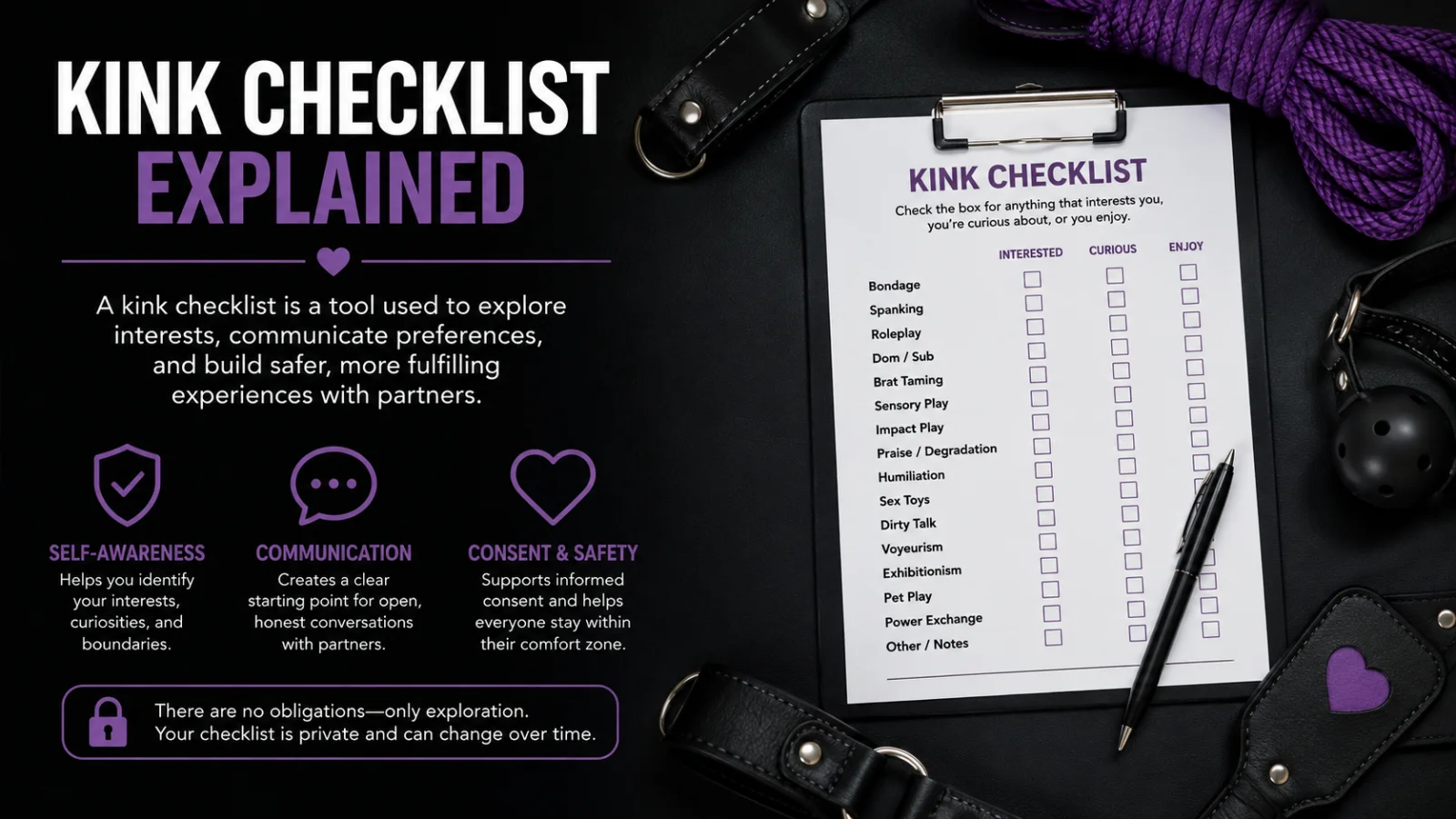
A BDSM or kink checklist is one of the most important communication tools used within the BDSM community. At its core, it is a structured way for people to discuss interests, boundaries, limits, experience levels, curiosities, and hard “no’s” before engaging in any kind of play or power exchange dynamic.
Contrary to many misconceptions, BDSM is not built around spontaneity or recklessness. Healthy BDSM culture emphasizes negotiation, consent, trust, honesty, and communication. A checklist helps facilitate those conversations in a clear, organized, and nonjudgmental way.
Some of the things that you will read will be repeated during other chapters when we get into negotiations and contracts.
What Is a BDSM Checklist?
A BDSM checklist is usually a document containing a wide variety of kinks, activities, relationship dynamics, roleplay ideas, sensations, and power exchange concepts. Each person reviews the list and marks their level of interest or comfort with each item.
Most checklists include categories such as:
Curious about
Willing to try
Enjoy occasionally
Strong interest
Favorite activity
Hard limit
Soft limit
Experienced
No experience
The purpose is not to pressure someone into trying more things. The purpose is to create informed consent and mutual understanding.
Why BDSM Checklists Matter
1. They Improve Communication
Many people struggle to openly discuss sexual interests, fantasies, or boundaries. A checklist provides structure that makes these conversations easier and less intimidating.
Instead of awkwardly trying to remember every topic, both partners can independently review the checklist and compare answers later.
This often leads to:
Better discussions
Reduced misunderstandings
More confidence
Stronger trust
Safer experiences
2. They Help Establish Consent
Consent in BDSM is active, informed, and ongoing. A checklist helps clarify:
What someone wants
What they may consider
What they absolutely do not want
This reduces assumptions and helps prevent boundary violations.
A hard limit means:
“This is not okay under any circumstances.”
A soft limit usually means:
“I may consider this under certain conditions, or I am unsure.”
Understanding the difference is essential.
3. They Encourage Self-Discovery
Many people entering the kink community do not fully know what they enjoy yet. Reading through a checklist can help someone discover:
Interests they had never considered
Activities they may want to research
Things they definitely dislike
Emotional or psychological triggers
Areas requiring more discussion
There is no requirement to “like” everything. In fact, most experienced kink practitioners have extensive limits.
Common Categories Found on Checklists
Sensation Play
Activities focused on physical sensations, such as:
Temperature play
Wax play
Impact play
Sensory deprivation
Tickling
Massage
Bondage
Restriction and restraint activities, including:
Rope bondage
Handcuffs
Mummification
Predicament bondage
Suspension
Power Exchange
Relationship or scene dynamics involving authority and submission:
Dominant/submissive dynamics
Service submission
Protocols and rituals
Discipline structures
Ownership dynamics
Roleplay
Fantasy-based interactions such as:
Authority figures
Pet play
Fantasy characters
Consensual humiliation
Age regression (non-sexual or adult consensual contexts)
Psychological Play
Emotional and mental dynamics, including:
Praise
Teasing
Control
Mind games
Fear play
Degradation or humiliation
These areas require particularly strong trust and communication.
How to Use a BDSM Checklist
Step 1: Complete It Separately
Each person should fill out the checklist independently without influence from the other person.
This encourages honest answers.
Step 2: Compare Results Together
Once complete, discuss:
Shared interests
Hard limits
Curiosities
Experience levels
Emotional concerns
Safety requirements
This should be a calm, pressure-free conversation.
Step 3: Discuss Safety and Boundaries
For any activity being considered, discuss:
Safe words
Physical limitations
Medical concerns
Emotional triggers
Aftercare needs
Experience levels
Risk awareness
Step 4: Revisit Regularly
People evolve over time. Interests, comfort levels, relationships, and boundaries may change.
A checklist should be viewed as a living document rather than a permanent contract.
Important Concepts Related to Checklists
Hard Limits
Absolute boundaries that must never be crossed.
Respecting hard limits is non-negotiable.
Soft Limits
Areas of uncertainty or conditional interest.
Soft limits require careful discussion and should never be pressured.
Safewords
Pre-established words or signals used to slow down or stop play immediately.
Common examples:
Green = good Yellow = slow down/check in Red = stop immediately
Aftercare
Emotional and physical care provided after a scene.
This may include:
Reassurance
Hydration
Blankets
Emotional support
Quiet time
Physical comfort
Aftercare needs differ from person to person.
Red Flags When Using a Checklist
A checklist should never be used to:
Pressure someone into activities
Shame limits
Manipulate consent
“Test” compatibility aggressively
Ignore inexperience
Skip education and safety discussions
Healthy BDSM is collaborative, respectful, and consensual.
If someone dismisses your limits or attempts to coerce you after reviewing a checklist, that is a major warning sign.
Final Thoughts
The BDSM checklist is not merely a list of sexual interests. It is a communication and consent tool designed to promote trust, honesty, transparency, and safety.
For many people, it becomes the foundation for healthier conversations about intimacy, boundaries, power exchange, and mutual exploration.
The strongest BDSM dynamics are not built on shock value or intensity. They are built on communication, respect, and informed consent.
Note: I do have an extensive checklist that I use. You are more than welcome to message me for a copy that you can use as I will not violate TOS by posting the link.