1 week ago. Saturday, April 4, 2026 at 3:15 AM
⚠️ Content Warning:
This entry discusses childhood abuse, neglect, and a life-threatening accident involving a child. It also includes themes of fear, survival, and early exposure to unsafe environments. Reader discretion is strongly advised.
____________________________________________________________________________________________
The Danger at Home
As I mentioned, I moved frequently, so when I lived in an apartment, my mother told Rose and me to clean our bedroom and leave her alone. We could tell something was off — her voice carried frustration, her mood sharp. So we did what we were told. We cleaned the bedroom, the bathroom, and even mopped the floor with washcloths and water.
We thought we were doing the right thing. We thought being quiet would keep the peace. But in her eyes, quiet meant trouble. The saying 'quiet kids' means they are up to something... which we were not; we were doing what we were told to do and trying to make her happy.
She came upstairs without warning. The floor was still wet, and before we could stop her, she slipped and fell. She was furious. Her anger didn’t land on the floor — it landed on us. (Imagine the doctor's office floor slippery, like their floors are.)
She shoved me. I hit my head on the floor, and my body fell on the bed that was lying on the floor. Feeling dizzy and dazed, I opened my eyes to see her spanking Rose, who was terrified and crying. She promised more punishment after dinner. We tried to explain, tried to tell her it wasn’t our fault, and we were doing as we were told, but she didn’t care.
That night, before the punishment, I whispered to Rose to layer her underwear. I was trying to protect us in the only way I knew how. She listened — until she told on me afterward. I glared at her, confused and betrayed. I would have never told. She thought telling would save her, but it didn’t.
Our mother ordered us both to strip down, no layers this time. Hands on the bed. The belt came down hard—not like discipline, but out of anger. I was a mover, a flincher. I couldn’t stay still, and each time I moved, it got worse. I went to bed crying, my whole body aching.”
That was what “home” meant.
Danger. Punishment. Rage.
Even when we obeyed, we couldn’t win.
________________
The Survival Games
We were just kids, but we didn’t always play like other kids.
Sometimes it was just for fun—laughing, daring each other, seeing who could win.
Other times, it was something different.
Rose—saw it as a game, I think.
She liked to turn everything into a challenge: who could hide the best, who could tie the tightest knot, who could escape first.
She was good at it, too.
And I’d play along, teasing her, picking on her the way sisters do.
But underneath the laughter, I was always thinking about what it really meant.
For me, it was never just a game.
It was practice.
Because if something bad happened, I was the oldest—and it would be on me to protect them.
It felt like a double-sided coin: one side was fun, the other fear.
On one side, we were kids testing ourselves; on the other, we were children preparing for things we shouldn’t have had to.
We were just trying to make the fear feel smaller by turning it into something we could control.
And when I told them to run, I meant it.
Not because I wanted to disappear,
but because I knew I could take it—even when I was afraid.
If it came down to it, I would face the worst so they could get away.
And no matter how far they ran, I’d always find them.
That was the promise I carried quietly, the one that made me feel strong even when my hands were shaking.
I knew I had to protect them all, but I also wanted to laugh, to just be a kid for once.
To run around without listening for footsteps or shouting in the background.
We learned to read moods like the weather—the quiet before the storm, the sudden drop in peace that meant something was coming.
We never said “I’m scared.”
We just said, “Let’s play.”
And sometimes it really was play.
Other times, it was survival disguised as a game.
Those moments made us clever, quick, and strong in ways no child should have to be.
But we weren’t supposed to learn how to survive.
We were supposed to be safe.
______________________________________________________________________________
Canopy
We were just playing.
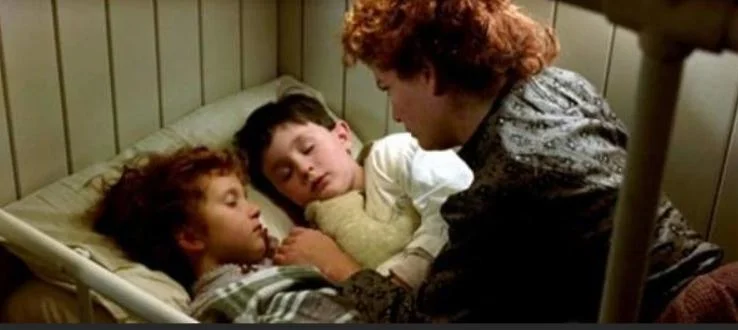
Rose and I, bouncing on the bed, laughing, being sisters.
That bed with the metal canopy felt like our own jungle gym.
We’d hang from the bars, jump around, and try to outdo each other.
It was the kind of play that kids are supposed to have—loud, carefree, a little too wild.
Then it happened.
I bounced too hard, and she fell off the edge.
Her head hit the floor, and she started crying.
It scared me—I didn’t mean to hurt her.
But before I could help her up or say sorry, she ran to Anna.
When Anna came in, I already knew what was coming.
Rose didn’t tell her we were playing.
She told her I pushed her.
She blamed me.
And once that happened, there was no talking my way out of it.
Richard came in next.
He told me to bend over the bed.
Not a word of comfort, not a question—just punishment.
He grabbed a clothes hanger.
The sound of it moving through the air is something I’ll never forget.
Each hit landed sharply, and all I could do was brace for the next one.
I remember Rose crying, saying, “Stop! She didn’t mean to!”
But it was too late.
They’d already decided I was guilty.
Because in that house, standing up for yourself only made things worse.
It’s strange how fast love and laughter could turn into pain.
One moment, we were sisters playing.
The next, I was the bad one again.
I learned that in that house, accidents didn’t matter—only blame did.
______________________________________________________________________________
Left in the Care of the Wrong People
There were times when the adults weren’t really there.
They were too lost in their own chaos—drugs, anger, or whatever storm took them away from us.
So they’d leave us with whoever was around.
Sometimes that meant Mary and Leanna.
They were older than us and were the adults then, the ones in charge, or just being around family.
At the pool one day with Leanna, we were at her friend's house using her pool, and we were told that if we wanted to stay longer to swim, we had to smoke a cigarette; otherwise, we’d have to leave and couldn’t swim anymore.
So we did it.
We were just kids trying to stay part of something, to keep the fun from ending.
On some different random day, they were outside smoking and I was watching and used to my family being smokers. Well, most of them. I stood there with them on the porch. They showed me how to “do it the right way,” how to breathe it in.
They laughed when I coughed and told me I’d get used to it, and that's how you do it.
I didn't really like it, but I didn’t say much.
I just wanted to belong.
They made smoking cigarettes seem normal—like it was just part of growing up.
I remember feeling torn between wanting to fit in and knowing deep down that it didn’t feel right.
They thought it was funny, but it didn’t feel like a joke to me.
We were supposed to be taken care of.
Instead, we were surrounded by people who didn’t know how to care for themselves, much less for us.
We were shown things and told things no child should ever have to know.
And there was no one to tell, no one who would’ve listened anyway.
I didn’t have the words for it back then, but I knew it wasn’t love.
I knew it wasn’t safety.
And I knew, deep down, that the people we were left with were the very ones we needed protection from.
______________________________________________________________________________
The Kind I Thought Was Love
I didn’t fully understand what love was back then.
I saw it in pieces — sometimes soft, sometimes sharp, sometimes gone before I could reach it.
I thought love was trying not to make anyone mad, keeping quiet when I wanted to cry, doing things that made people smile, even when it didn’t feel right inside.
I tried to be helpful.
That was my way of showing love — cleaning, fixing, listening, taking care of whoever needed it.
If someone was upset, I wanted to make it better.
If someone was angry, I wanted to calm them down.
I thought maybe if I could be good enough, kind enough, useful enough, then the bad moments would stop.
I didn’t realize yet that love isn’t supposed to hurt.
It isn’t supposed to make you afraid or small.
But I still believed in it — even then.
In my own ways, I was loving the only way I knew how: by surviving, helping, and hoping.
______________________________________________________________________________
The Day I Saved Her - The Nail Gun
It was quiet that day.
Just another normal day at Richard’s house.
He was working on building a master bedroom, and his tools were left out — all in one spot near our bedroom and the opening to theirs.
We’d been told not to touch them, but they were right there, close enough for any child to reach.
I was doing my own thing, and Rose was doing hers.
She must’ve picked up the nail gun, not knowing what it could do.
Being a child. Being unaware of dangers.
“Even though it was unplugged, it still fired into her chest.
She came to me, holding her chest, saying it hurt, and she didn't feel well.
We had buck beds. I was on the bottom, but sometimes we take turns.
I didn’t understand what she meant. Lay her in bed. Asked her where it hurts, and she pointed to it.
When I looked, I saw only a small mark — nothing that looked serious, just a tiny spot that didn’t seem like much. I wipe it for her and try to care for her.
But I could see something in her face that told me it was worse than it looked.
So I listened to my gut and went to get Mom — Anna.
She was on the phone, like always, talking to her friend.
I tried to wait, but she waved me off.
I turned back and said, “Rose needs help. I don’t know what’s wrong with her.”
Telling her on the phone, not right now.
She brushed me off again, annoyed that I was interrupting, but I didn't stop getting her attention.
When she finally told her friend she had to go, and she would call later, and hung up, it was already almost too late.
By the time Richard came home, he saw the situation and heard that Rose didn't feel okay.
I told her what she told me, and that her chest is hurting.
We went to find Rose, and she wasn’t in the bed where I’d left her.
She had moved to our little desk area — lying on top of it, her skin pale, her lips turning blue.
That image will never leave me.
Richard realized then what had happened — that she’d shot herself in the chest.
He wanted to know how, but the answer was right in front of him: his tools were left out, right where he left them. Nearby are the bedroom and the entrance to their bedroom.
No locks. No safety. No supervision.
I thought I was going to lose my sister right in front of me, and I couldn’t do anything.
We rushed her to the hospital. I remember that car ride, Anna crying, and Richard speeding.
And I was just there looking at my sister in Anna's arms.
She had shot herself in the chest—so close to her heart that it could have taken her from us.
And somehow, she lived.
People still talk about who noticed first, who saved her, who got there in time.
And yes, it does bother me to this day.
But the truth is, it never should’ve happened.
The adults were supposed to keep us safe — and they didn’t.
Their negligence almost cost my sister her life.
All I did was what any child shouldn’t have had to do: see the danger, sound the alarm, and pray it wasn’t too late.
_____________
Reflection
That day was only the beginning.
It planted something in me that kept growing — the need to watch, to stay alert, to see danger before it happened.
I may take two steps back, but I'll keep moving forward and trying to be one step ahead.
Back then, it came from fear.
But over time, it became instinct.
I learned to notice everything:
the tone in someone’s voice, the way silence could feel heavy, the small signs that said something wasn’t right.
At first, it was just about survival — but later, it became an integral part of who I am.
It shaped how I protect others, how I care for animals, and how I stay aware when everyone else relaxes.
It was the start of something deeper — the part of me that still scans every room, listens between the words, and carries the quiet knowing that safety isn’t promised, it’s guarded.
content warning(9)