Content Warning:
This post contains discussions of childhood trauma, abuse, and emotional distress. Reader discretion is advised.
This entry reflects my personal experiences and is written from a place of reflection and healing.
This post describes real-life events and is not related to consensual BDSM, roleplay, or kink.
Some details may be difficult to read. Please take care of yourself while reading.
_____________________________________________________________________
Part 1 – The Truth They Never Told
I Fought Hard, and I Was Never Broken
The thing that sticks out the most right now is how hard I fought back then.
Thomas tried to break me—but he never did.
And he wasn’t the only one.
Margaret, Thomas, Jordan, and the grandmother each played a part in shaping the pain I lived through even more, but the worst. I was grateful to be taken away from my biological mother with my siblings. There was real pain and struggle in that life, but I believed we had escaped something dark to walk into something darker.
Here’s how they did it:
Margaret – The role she played in my pain
(Note: Margaret often used Jordan’s Asperger’s diagnosis as an excuse for his behavior. She defended him instead of holding him accountable, even when he was hurting others. What she did to me went beyond neglect—it was an active betrayal, masked by authority. She turned love into a weapon and made me feel like I didn’t belong in a family that was supposed to protect me.)
Claimed to be a mother, but never loved me. She wore the title, but not the heart. I called her Mom because I was used to giving people that name in foster care, but she never earned it. I felt like property, not a daughter.
Called me names like “slut” and “liar” instead of asking what I needed. She labeled me based on what she feared or didn’t understand, and made me carry the weight of shame that wasn’t mine.
Slapped me across the face for playing with my siblings, just for trying to feel connected, included, and like a child for once. I had placed feathers on the ceiling fan for them to catch as a game. We laughed together, just being kids. But when she came home and heard about it, she didn’t ask what happened—she punished me for it. That slap wasn’t just about feathers. It was about control, about silencing joy, and about reminding me that I wasn’t allowed to be one of them.
Defended Jordan and refused to hear the truth about what he did to me. Even when I cried, even when I shook, even when Thomas caught him in the act—she still chose him over me.
Pretended to care only when others were around or when it made her look good. I became her performance piece—a prop she used to gain sympathy while letting me rot behind closed doors.
Used shame and guilt to manipulate me emotionally. If I cried, I was being dramatic. If I spoke up, I was ungrateful. She made me question every feeling I had, as if it were an offense.
Told me I couldn’t be trusted after finding my self-harm wounds. Instead of comfort, I got surveillance. Instead of love, I got restrictions. It made me feel like even my pain was a betrayal.
Tried to teach me about sex and bodies in confusing, harmful ways, exposing me to inappropriate movies and twisted language. Her way of ‘educating’ me left me feeling dirty, not informed. I was a child trying to understand my body, and she made it worse, exposing me to inappropriate movies and talking about private parts in twisted ways.
Spread lies about me to others, including my family. She tried to rewrite my story to anyone who would listen—because controlling the narrative meant keeping her image clean while I carried the stains, calling me a thief and manipulator.
_______________
Thomas –The control he held over me
(Note: Thomas didn’t just hurt me—he reshaped how I understood power, faith, and attention. Every act of violence was masked as discipline. Every laugh during pain was meant to confuse me. He twisted the meaning of love and punishment so deeply that I sometimes questioned what normal even looked like.)
Physically abused me—choked me, pushed me, shoved me to the floor. This wasn’t a moment of anger—it was a pattern. It happened when I was at my weakest, most silent, or when I was trying to stand up for myself. His hands didn’t just hurt—they silenced.
Mocked my faith, using God against me. Thomas used religion like a blade. He told me God wouldn’t love someone like me. He twisted the name of God to make me question if I was even worthy of love or grace. And when I tried to believe anyway, he made it a joke.
Laughed at Jordan when I pinned him, but only because he was embarrassed his son lost to “a small girl.” He didn’t care that Jorden tormented us—he cared about his son’s pride. And instead of stepping in to protect me, he laughed like it was entertainment.
Played violent games with me, like the Punching Game. It was a twisted game where you couldn’t say a specific letter, and if you slipped up, you’d get punched hard. Thomas told me the rules of the game are simple. A-Z Chose a letter like “C” so you can’t say any word that starts with “C”, like coffee. When I mess up and punch him, I would have to close my eyes so I wouldn’t see the hit coming. He laughed. I tried to laugh, too, because it was the only attention I ever got from him. But it left bruises. It wasn’t fun. It was pain disguised as play—and I convinced myself to like it, because being hit with a laugh felt better than being ignored in silence.
Controlled everything I did, grounding me constantly, assigning me essays, math books, and dictionary reading. My punishments weren’t just about behavior—they were about erasing who I was. He treated me like I had to be rebuilt, rewritten, reprogrammed.
Ignored my pain, even when he saw Jorden on top of me. Thomas walked in on Jorden assaulting me. He saw it with his own eyes, and God heard my prayer—Jorden on top of me, in his room, doing something no child should have to endure. That could have been the moment everything changed. That could have been the day someone believed me. Instead of helping, Thomas made Jorden and me stand in the parents’ bedroom like we were equals in wrongdoing. He told Margaret what he saw, but still let Jordan stay. Thomas heard my voice trembling, trying to explain myself. I said no to Jordan, but he dismissed it all. He chose silence. He chose shame. He chose Jordan. I was told to go to bed. Taylir was told to finish the pool and stay away from me. Jordan never listens.
Installed cameras to monitor me, not to protect me. To know and see everything he wanted to see. No cameras were in the parents’ room, Jorden’s room, the basement, or the bathrooms. I had a camera in my room. All the siblings had cameras. The cameras weren’t for safety—they were for control. He watched me like I was a threat, a project, a problem to contain.
Used my obedience to prove I wasn’t worthy of freedom—even when I followed his rules perfectly, he didn’t praise me. He moved the goalposts constantly. Obedience wasn’t enough—he wanted submission. Total silence. Total control.
_______________
Jordan – What I endured in that house
(Note: Jordan had Asperger’s. That is part of his story—but it does not excuse the harm he caused. If anything, the adults had an even greater responsibility to set boundaries and protect others, including me, and they failed.
Asperger’s is a form of autism that affects social communication, routines, and sensory awareness. It may cause someone to misread social cues, but it does not make someone violent, sexually abusive, or predatory.
What Jordan did—repeatedly raping me, sneaking into my room, manipulating me with silence, fear, and lies—was not a misunderstanding. It was not about missing signals. It was premeditated.
He waited until others were asleep. He groomed me with porn. He threatened me. He knew how to lie to protect himself. And every time I tried to speak the truth, he silenced me.
That is not confusion. That is control.
The adults around him, especially Margaret, chose to use his diagnosis to protect him instead of protecting me. They were more concerned about how he looked than about what I lived through.
They wanted the world to see a misunderstood boy. But I saw the truth:
A wolf in sheep’s clothing. )
Raped me repeatedly from age 10 to 13. It wasn’t just one time. It wasn’t a misunderstanding. It was repeated, and it felt intentional and deeply harmful. I was a child trying to survive—and he was someone the adults chose to protect.
Groomed me with porn and control, demanding silence, obedience, and even fake pleasure. He used videos to confuse and condition me, teaching me how to submit to what he wanted. He trained me not to resist, but to pretend I wanted it.
Forced me into sexual acts while others were asleep or away. He waited until the house was quiet, when no one was watching. I would be dragged from my bed or cornered in hidden places—and I was too afraid to scream. It wasn’t confusion. It was a strategy.
Threatened me and others, saying he would do the same to my sister Haley if she were still there. He knew exactly how to trap me in silence. I stayed quiet to keep others safe, even when no one was protecting me.
Hurt me physically during the abuse, using his fingers, his teeth, and force. It wasn’t just a violation—it was pain. Pushing, biting, pulling at me like I wasn’t human. I bled. I bruised. And I wasn’t allowed to cry.
Lied to cover it up, and the adults believed him. He denied everything, and they accepted his version every time. I spoke the truth—and I was punished. He lied—and he was protected.
Continued abusing me even after being caught. Thomas saw him on top of me. Margaret was told. The truth was known—and still, nothing was done. They didn’t separate us. They didn’t protect me. He hurt me again. Because they let him.
_______________
The Grandmother – When silence became betrayal
(Note: The grandmother wasn’t the loudest or the cruelest—but her silence was a form of betrayal I’ll never forget. She let me believe I could trust her. She let me sit on her couch and read. She let me feel like I could finally breathe—then gave my trust away like it meant nothing. She protected the ones who hurt me, and her quietness only made it harder to prove what was really happening.)
Let me feel safe, only to betray my trust. At first, I thought she might be different. We read books together. I felt calm around her. But that peace was short-lived. She turned on me when I opened up—used my honesty against me.
I thought I had someone to talk to. I told her how I got into the locked pantry—not to brag, but to feel heard. And she told them anyway.
Chose loyalty to Margaret and Thomas over protecting me. She could’ve stepped in. She could’ve said something. But she stayed silent—because it was easier to stay on their side than to face what they were doing.
Judged me with her silence instead of standing up for what was right. Her looks, her tone, the way she’d go quiet—it was all judgment. She didn’t need to say the words. I felt them.
Watched the abuse happen from a distance and said nothing. She lived in the same house. She knew the routines. She heard the footsteps. And still—nothing. That silence felt like a deep betrayal to me.**
Shared my private confessions with Margaret, even when I begged her not to.
Chose loyalty to Margaret and Thomas over protecting me.
Judged me with her silence instead of standing up for what was right.
Watched the abuse happen from a distance and said nothing.
_______________
Before the Masks – How They Used the System
I was grateful to be taken away from my biological mother with my siblings. There was real pain and struggle in that life, but I believed we had escaped something dark to walk into something darker.
What I didn’t know was that the Whites would turn out to be far worse. The lesser evil was my biological mother. At least with her, I knew what to expect. But with the Whites, the cruelty was hidden behind smiles and church clothes. They looked like salvation—but they were something else entirely.
There was a moment when I could have told the DSS worker I didn’t want to be adopted by the Whites. I knew I had that choice. But I also knew that if I said no, they would still adopt my brother Noah—who later changed his name to Alex—and my sister Brie. I felt I had no real choice at all.
The only choice I felt I had was to protect them. To protect other kids who didn’t have anyone else. I accepted the adoption not because I believed in it—but because I believed they might be safer if I stayed.
Before they adopted me, the Whites were foster parents. They had the license. They had the training. They had the words that made them look like good people. They took in children, not out of love—but out of control, image, and gain.
Once they adopted us, they closed the door—literally and legally. The checks stopped. The system looked away. And that’s when the real abuse began.
They stopped fostering other children after adopting me and two of my siblings.
What most people don’t know is that I could’ve said no to being adopted. I could’ve told the DSS worker I didn’t want to go through with it. But I was terrified.
Because if I said no, the Whites would’ve still adopted my brother Noah—who they renamed Alex—and my sister Brie. And I would’ve lost the only shield I had left to protect them.
So I said yes. Not because I wanted to—but because I believed the only choice I had was to stay close, stay quiet, and try to keep them safe.
I didn’t Chose adoption. I chose survival. And I chose them.
I know it’s easy to ask, “Why didn’t you say no?” But when you're a kid in foster care, and someone is about to adopt your siblings, the idea of being separated feels like death.
I didn’t say yes because I wanted them. I said yes because I couldn’t leave the people I loved behind—not after everything we’d already lost. And I didn’t want other foster kids to get hurt as I did. I knew once the adoption was final, the Whites would stop fostering, and those other kids might be spared.
And when my siblings could eventually go back home—or somewhere else—I hoped they’d be somewhat safe. Even if I wasn’t.. They no longer needed the mask of temporary kindness—because now, we were theirs. And they made sure we knew it.
_______________
Wolves in Sheep’s Clothing
People like Margaret, Thomas, Jordan, and the grandmother didn’t always look like monsters. They didn’t always shout or hit in ways the world could see. Sometimes they smiled. Sometimes they quoted Scripture. Sometimes they used diagnoses, silence, or shame to disguise their cruelty.
They were wolves. And they wore sheep’s clothing.
Margaret cried in front of others and played the role of a tired, patient mother—but behind closed doors, she spread lies, blamed me, and protected a predator.
Thomas spoke about God, but only to twist it against me. He once used God's name to shame me and blocked me from going to church groups for teens that might have helped me. He didn’t just mock my faith—he used control, humiliation, and physical abuse as tools. He watched my pain, and instead of helping, he added to it with force, silence, and power games.
Jorden was called misunderstood because of his Asperger’s—but he knew how to groom, lie, isolate, and overpower. From my experience, it didn’t feel like confusion—it felt harmful and intentional.
The grandmother offered calm tea and book readings, but turned her back on the truth when it mattered most. She helped protect abusers with her silence.
They fooled the world. They even made me question myself.
But I see them clearly now.
Abuse doesn’t always look like a monster. Sometimes it looks like a parent. Sometimes it says “I love you,” while it destroys you. Sometimes it wears a smile.
And no matter how sweet they seemed, or how convincing their masks were:
It felt like everything around me was trying to break me. But I never broke.
Together, they tried to twist me into something unrecognizable.
They wanted me to either disappear or become like them—
cold, bitter, cruel, and numb.
But I wouldn’t.
Yes, Thomas punished me like it was a sport:
Forced exercise.
Sentences.
Essays.
Math workbooks.
Reading the dictionary like it could rewrite who I was.
Once a year, I wasn’t grounded—and that was always on my birthday.
But even that didn’t feel like freedom. When I was "ungrounded," it was something I wasn’t used to. It felt off. I didn’t know how to move, how to speak, or how to just be.
If I were told to play or choose something to do, I would question every step I took. I was scared of making a mistake or getting in trouble again.
I lived on eggshells.
I thought I knew how to be a kid. I wanted to know. But in this house, I didn’t know how.
I’ll admit it: I went to the pantry. I got food. Because food made me feel safe when nothing else did.
They used my siblings to watch me, to sniff out what I did wrong, and report it. And even though I protected them… I was alone.
But I still loved them. Always.
But like clockwork, they’d find a reason the next day to cage me all over again.
Even in that house, even in all that chaos, there was one punishment I somehow made sacred.
They made me sit in a chair in the kitchen, facing the trees.
And I made that chair my altar.
I sat there and talked to God as if He were right in front of me.
I asked Him for signs. For strength. For truth.
Sometimes, for rescue.
When Thomas saw that, he mocked it.
“Do you think God likes liars?”
He wanted to twist my faith against me.
But I knew the difference between a lie and survival.
Yes—I lied about stealing food.
I was hungry. I was trying to survive.
But I told the truth about the pain, the hurt, and about Jordan.
They called me names.
They labeled me things they wanted me to believe—
Slut.
Useless.
Crazy.
A liar.
A manipulator.
A burden.
But I didn’t become what they said.
I didn’t become what they hoped.
They didn’t know the kind of monster they were trying to create—
and I refused to become her.
I used to sleep with a sharpened stick under my pillow.
I brought knives to the bathroom—not to hurt anyone else,
but because I didn’t know if I had the strength to keep going.
I never used them.
I didn’t want more destruction.
I didn’t want to give them a new name to call me: Murderer.
I thought about ending my life more than once.
Not to punish them—but to finally be free.
Because I truly believed they wouldn’t care.
And for a while, I was okay with that.
But I wasn’t okay with my siblings seeing me that way.
I thought of Haley and how I had stopped her from hurting herself.
I couldn’t let them see me give up—not if there was still breath in me.
I didn’t know how to survive.
But I knew I had to.
Because if I didn’t—who else would protect them?
I took the pain.
I took the blame.
I let myself be the punching bag so maybe they wouldn’t be.
I let Jorden hurt me because I thought if it was me, it wouldn’t be them.
But it happened to them anyway.
And that pain—the one where I wonder if I failed them—still lives in me.
When they kicked me out, I felt like I had lost my shield.
Like my siblings were exposed, and it was my fault for not being able to stay longer.
But the truth I see now—the one that still aches but also stands tall—is this:
Even when I was on the floor, even when I was silenced, starved, or made to feel invisible—I was never truly broken. They tried to crush my spirit. They wanted me to vanish, to become bitter, to become what they accused me of. But something deeper in me—something sacred—held on.
I kept loving. I kept protecting. I kept praying. I kept surviving.
That’s not weakness. That’s proof that even in the worst places, I still chose light.
Because I was never what they said. And I was never broken.
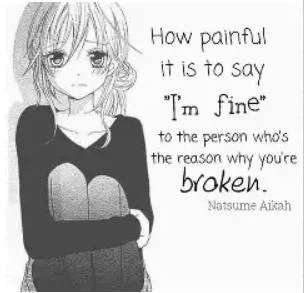

They tried to break me.
Every one of them.
But I never broke.