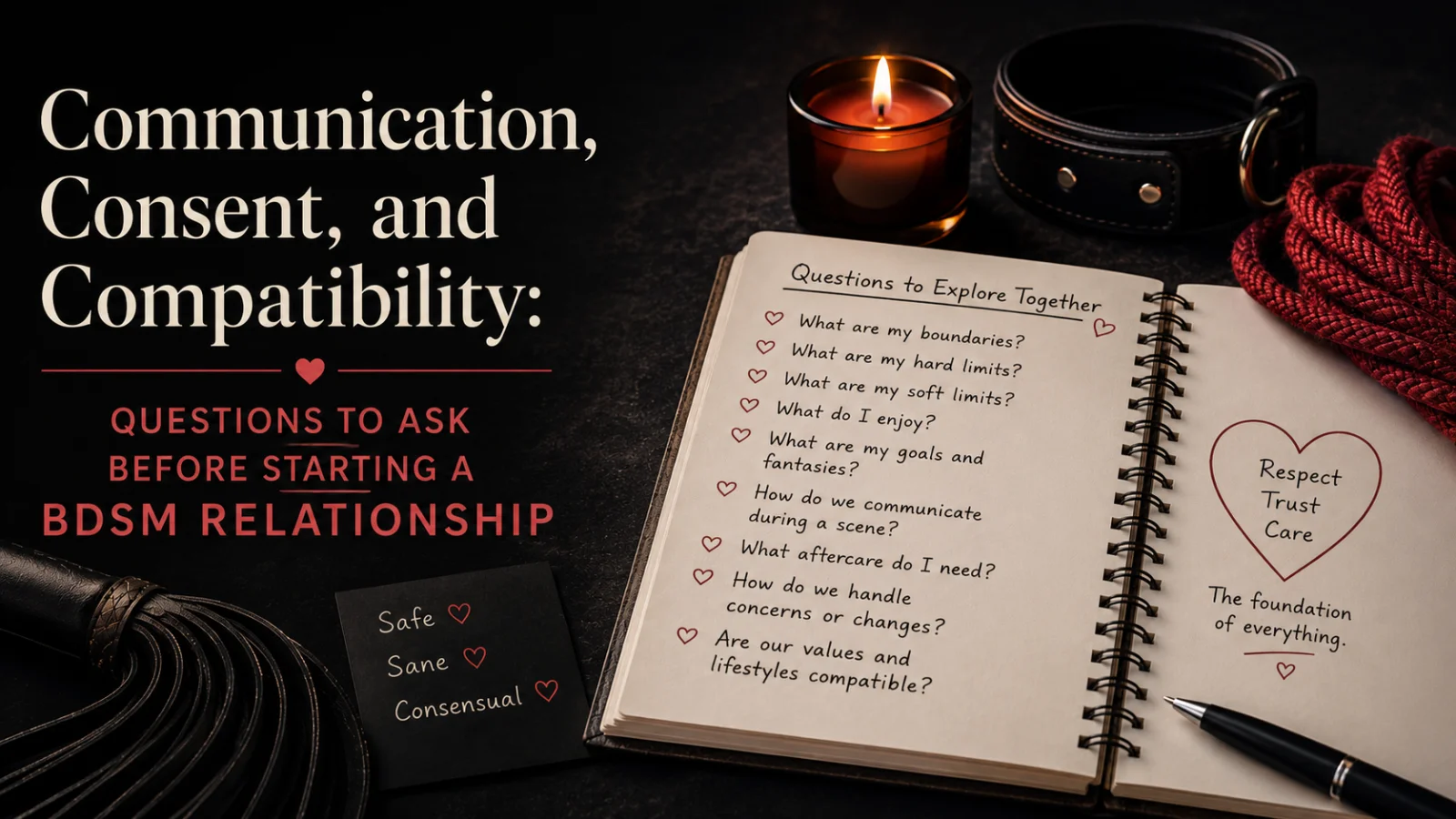

One of the most misunderstood aspects of the BDSM lifestyle is the belief that it revolves primarily around sex, pain, or control. While those elements may exist within certain dynamics, they are not the true foundation of healthy BDSM relationships. At its core, BDSM is built upon communication, consent, trust, negotiation, and mutual understanding.
Before collars, contracts, titles, scenes, or power exchange dynamics begin, there should be honest and intentional conversation. In many ways, BDSM requires stronger communication skills than conventional relationships because participants are often navigating emotional vulnerability, physical intensity, psychological intimacy, and negotiated power exchange simultaneously.
For newcomers entering the lifestyle, learning how to communicate effectively can be one of the most important safety tools available. For experienced practitioners, ongoing communication remains essential for maintaining healthy and sustainable dynamics.
This chapter explores the types of conversations and questions that should take place when beginning to talk with someone in the BDSM lifestyle and explains why these discussions are critical to emotional and physical safety.
Why Communication Matters in BDSM
Healthy BDSM relationships do not function safely through assumptions. Consent, boundaries, and expectations cannot be guessed or implied. Because BDSM may involve physical restraint, pain, humiliation, psychological roleplay, or authority exchange, misunderstandings can become harmful very quickly if communication is neglected.
Strong communication serves several purposes within BDSM relationships:
- Establishing trust
- Clarifying intentions
- Identifying compatibility
- Defining boundaries
- Negotiating consent
- Reducing emotional misunderstandings
- Improving physical and emotional safety
- Creating long-term relationship stability
Many experienced members of the BDSM community often say that BDSM begins long before any scene takes place. It begins with conversation.
Understanding a Person’s Background and Interests
When first speaking with someone in the lifestyle, one of the most important steps is understanding how they view BDSM and what role it plays in their life.
Helpful introductory questions may include:
- What brought you into BDSM?
- How long have you been involved in the lifestyle?
- How do you identify within BDSM?
- What interests you most about the lifestyle?
- Are you active in the community or mostly private?
- What does BDSM mean to you personally?
These questions are not designed to test someone’s experience level. Instead, they help reveal a person’s mindset, maturity, emotional awareness, and approach to power exchange.
For example, someone who discusses BDSM entirely in terms of “control” without mentioning trust, communication, or responsibility may approach the lifestyle very differently from someone who emphasizes mutual care and negotiated consent.
Understanding motivation matters because healthy BDSM is not simply about dominance or submission. It is about how those roles are practiced ethically and consensually.
Clarifying Relationship Intentions
Not everyone enters BDSM seeking the same type of connection. Some individuals are interested in casual play partnerships, while others seek deeply emotional, long-term power exchange relationships. Problems frequently arise when expectations are assumed rather than discussed openly.
Questions regarding intentions can help establish compatibility early:
- What are you hoping to find right now?
- Are you looking for play, friendship, mentorship, or a committed relationship?
- Are you monogamous, polyamorous, or open?
- Do you want the dynamic to exist only during scenes or outside the bedroom as well?
- What does loyalty mean to you?
- How much communication do you expect between interactions?
These conversations may feel serious early in a relationship, but they often prevent confusion and emotional conflict later. Healthy BDSM relationships require realistic expectations from both parties.
Consent and Boundary Discussions
Consent is one of the central ethical principles of BDSM. Ethical BDSM relies upon informed, voluntary, ongoing consent from all participants. A person unwilling to discuss consent openly should be approached with caution.
Important consent-related discussions include:
- Hard limits
- Soft limits
- Safewords
- Medical considerations
- Emotional triggers
- Aftercare needs
- Sexual health discussions
- Scene negotiation practices
Specific questions may include:
- What are your hard limits?
- What are your soft limits?
- What safewords do you use?
- How do you handle check-ins during scenes?
- What does aftercare look like for you?
- How do you negotiate scenes beforehand?
- Are you comfortable discussing STI testing and sexual health?
- How do you handle mistakes or accidents?
Consent within BDSM is not a one-time agreement. Consent can be withdrawn at any time, and boundaries may evolve as trust develops. Healthy communication surrounding consent is not a sign of distrust. It is a sign of responsibility.
Experience Does Not Automatically Equal Safety
Many newcomers assume that years of experience automatically make someone trustworthy or skilled. Unfortunately, this is not always true. Some individuals may have extensive time in the lifestyle but poor communication skills, unsafe practices, or manipulative tendencies. Others may be relatively new while still demonstrating caution, humility, education, and respect.
Questions about education and safety awareness can provide valuable insight:
- What kinds of play do you have experience with?
- What are you still learning about?
- How do you educate yourself about BDSM safety?
- Have you attended classes, workshops, or community events?
- What safety precautions do you follow during scenes?
A willingness to continue learning is often one of the strongest indicators of maturity within the lifestyle.
Emotional Compatibility and Psychological Safety
BDSM dynamics often create emotional intensity and vulnerability. Because of this, emotional compatibility may be just as important as physical compatibility.
Conversations about emotional needs can help both individuals understand each other more clearly:
- What helps you feel safe with someone?
- What are your emotional triggers?
- How do you handle conflict or misunderstandings?
- What does trust look like to you?
- What kind of reassurance do you need?
- How do you communicate discomfort or uncertainty?
These discussions can help identify communication styles, attachment patterns, emotional expectations, and potential incompatibilities before deeper dynamics develop. Healthy BDSM relationships should create emotional safety, not emotional instability.
Questions for Dominants
Ethical dominance involves far more than authority or control. Responsible Dominants understand that leadership within BDSM carries significant responsibility.
Important questions for Dominants include:
- How do you define leadership within a dynamic?
- How do you earn trust from a submissive?
- How do you respond when someone says “no”?
- What responsibilities do you believe Dominants have?
- How do you distinguish discipline from abuse?
- How important is communication outside scenes?
Healthy Dominants understand that power within BDSM is consensually given, not forcibly taken.
Questions for Submissives
Submission also requires communication, self-awareness, and clearly defined boundaries. Healthy submission is not weakness, helplessness, or the absence of autonomy.
Important questions for submissives include:
- What helps you submit to someone?
- What type of Dominant energy works best for you?
- What boundaries around control are important to you?
- What does healthy submission mean to you?
- How do you communicate discomfort or hesitation?
- What causes you to lose trust quickly?
These discussions help create a healthier understanding of compatibility and expectations within the power exchange.
Recognizing Red Flags
Certain behaviors may indicate that a person is unsafe, manipulative, or emotionally unhealthy within BDSM relationships.
Potential warning signs include:
- Refusing to discuss consent or boundaries
- Saying safewords are unnecessary
- Pressuring for immediate ownership or commitment
- Attempting to rush scenes or emotional attachment
- Treating limits as disrespect
- Using BDSM language to justify cruelty or manipulation
- Isolating someone from friends or community support
- Becoming defensive or angry when questioned
- Healthy BDSM should never rely upon coercion, fear, intimidation, or emotional manipulation.
Recognizing Green Flags
Healthy individuals within the BDSM community often demonstrate:
- Respect for boundaries
- Patience with trust-building
- Open communication
- Accountability for mistakes
- Interest in continued education
- Emotional maturity
- Respect for consent at all times
- Care for emotional safety as well as physical safety
In many ways, healthy BDSM relationships require stronger communication and accountability than many conventional relationships.
Final Thoughts
The beginning of a BDSM relationship should not feel rushed or secretive. Trust requires time, communication, and consistency.
Asking thoughtful questions is not about destroying spontaneity or romance. Instead, these conversations help create safety, compatibility, and mutual understanding. They allow individuals to determine whether a relationship has the potential to become healthy, ethical, and sustainable.
Strong BDSM dynamics are not built solely upon attraction or fantasy. They are built through honesty, communication, trust, consent, and respect.
Before any power exchange can safely occur, there must first be understanding.