
When many people first hear the term BDSM, they often think of chains, restraints, dominance, submission, or intense physical play. What is frequently overlooked, however, is that healthy BDSM is not built on pain or control alone—it is built on trust, emotional intelligence, and mutual understanding.
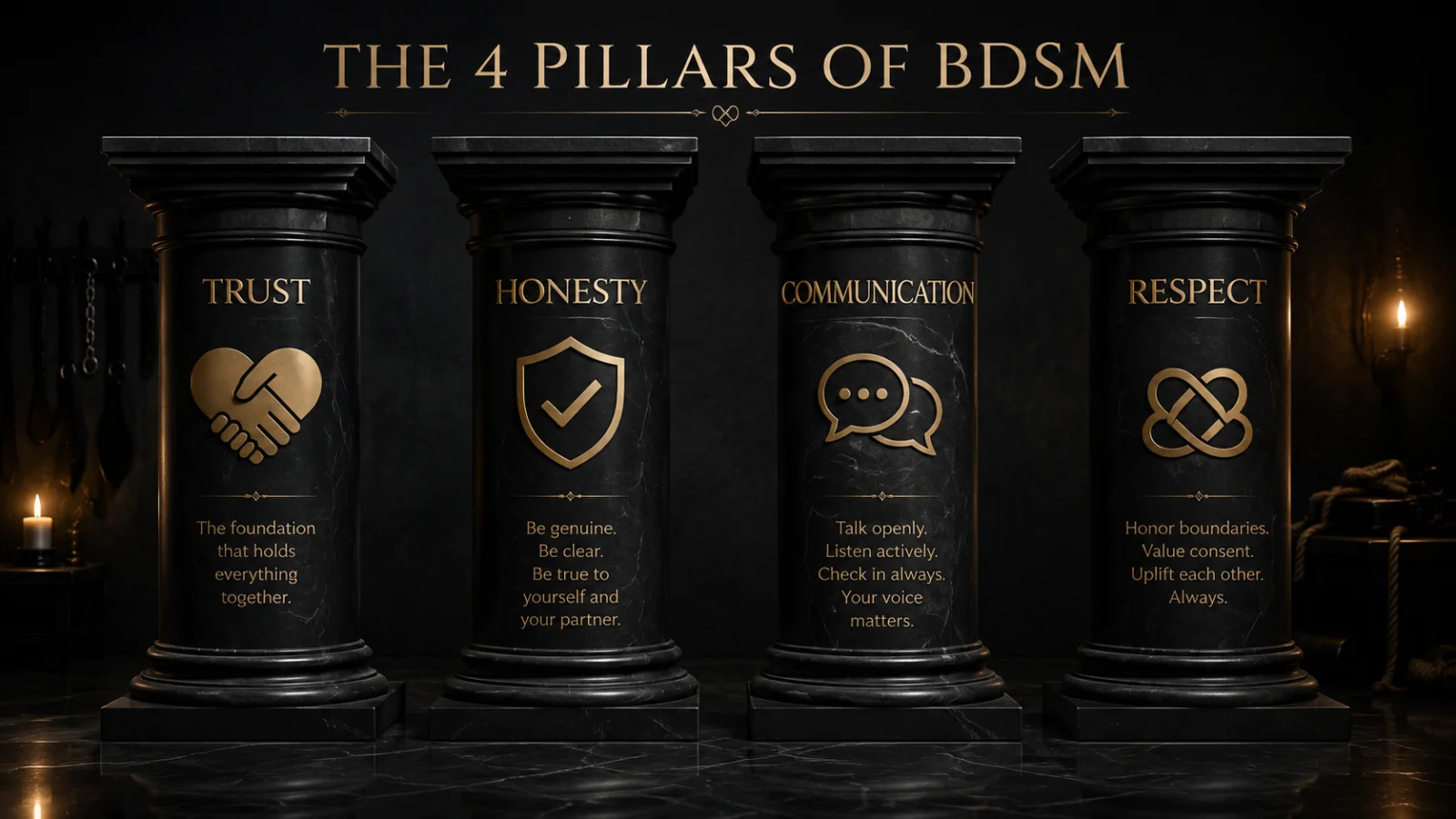
Behind every healthy dynamic are four essential principles that create the foundation for ethical and fulfilling power exchange:
- Trust
- Honesty
- Communication
- Respect
These four pillars are what separate healthy BDSM relationships from manipulation, coercion, and abuse. Whether someone is exploring BDSM for the first time or has years of experience in the lifestyle, these principles remain essential.
Trust: The Cornerstone of BDSM
Trust is the foundation upon which all BDSM dynamics are built. In BDSM, people often place themselves in vulnerable positions emotionally, mentally, and physically. A submissive trusts a Dominant to honor boundaries, prioritize safety, and exercise control responsibly. A Dominant trusts a submissive to communicate honestly, respect negotiated agreements, and engage authentically within the dynamic.
Without trust, vulnerability becomes unsafe. True trust is not created through titles or labels. It is earned through consistency, reliability, accountability, and care over time. A trustworthy partner listens, respects limits, follows through on agreements, and never weaponizes vulnerability.
Healthy trust in BDSM means:
- Feeling safe expressing fears or concerns
- Knowing boundaries will be respected
- Believing consent will be honored immediately
- Understanding that mistakes can be discussed openly
- Knowing that either person can stop or renegotiate at any time
Trust should never be demanded instantly. People who pressure others for immediate submission, unquestioning obedience, or blind faith often create unhealthy and dangerous situations. Real trust grows slowly through actions—not words alone.
Honesty: The Key to Emotional Safety
Honesty is essential in every relationship, but in BDSM it becomes even more important because power exchange relies heavily on vulnerability and consent.
Partners should be honest about:
- Experience levels
- Intentions and expectations
- Emotional needs
- Limits and boundaries
- Relationship status
- Mental and physical health concerns
- Comfort levels during play and dynamics
Dishonesty can create serious emotional and physical risks. Someone pretending to have more experience than they actually possess may place others in unsafe situations. A person hiding emotional attachments or manipulative intentions can destabilize an otherwise healthy connection.
Honesty also requires self-awareness. People enter BDSM for many different reasons: exploration, intimacy, identity, healing, excitement, or emotional connection. Understanding personal motivations can help prevent unhealthy attachment, dependency, or unrealistic expectations.
Healthy BDSM requires the ability to say:
- “I’m uncomfortable.”
- “I need reassurance.”
- “I made a mistake.”
- “I’m not ready for this.”
- “I need to slow down.”
- “This no longer feels healthy for me.”
Honesty creates clarity, and clarity creates safety.
Communication: The Lifeblood of BDSM
Communication is one of the most important skills in BDSM. Healthy dynamics depend on ongoing conversations before, during, and after scenes or interactions. BDSM is not based on assumptions—it is based on negotiated consent and mutual understanding.
Partners communicate about:
- Hard and soft limits
- Fantasies and interests
- Safe words and signals
- Emotional triggers
- Medical concerns
- Aftercare needs
- Expectations within the dynamic
- Boundaries surrounding authority and control
Strong communication prevents misunderstandings before they become harmful. One of the clearest differences between ethical BDSM and abuse is the presence of informed, enthusiastic, and ongoing consent. Ethical BDSM involves discussion, negotiation, and regular check-ins—not coercion or pressure.
Communication is also about listening. A healthy partner does not dismiss concerns, become defensive over boundaries, or punish honesty. Open communication requires patience, empathy, emotional maturity, and a willingness to adapt as needs evolve. Even experienced practitioners continue learning how to communicate better because relationships and dynamics naturally grow and change over time.
Respect: The Heart of Ethical Power Exchange
Respect is what keeps BDSM ethical and healthy. Power exchange may involve authority, control, discipline, or surrender, but none of those things remove the humanity, dignity, or autonomy of either partner.
Respect means:
- Honoring boundaries and consent
- Treating partners with dignity
- Protecting emotional wellbeing
- Respecting privacy and confidentiality
- Accepting “no” without guilt or punishment
- Recognizing that submission is given voluntarily—not owed
A Dominant who ignores boundaries or uses humiliation outside negotiated consent is not demonstrating strength or leadership—they are demonstrating disrespect. Likewise, a submissive who intentionally manipulates or disregards negotiated agreements damages the integrity of the dynamic.
Healthy BDSM relationships are often built on deep mutual admiration. Even in strict authority-based dynamics, respect remains central because ethical power exchange requires care, responsibility, and accountability from everyone involved. Respect transforms BDSM from simple control into meaningful connection.
When One Pillar Breaks
These four pillars are deeply connected. When one weakens, the others are affected as well.
- Without trust, vulnerability becomes fear.
- Without honesty, communication loses meaning.
- Without communication, boundaries become unclear.
- Without respect, power exchange becomes harmful.
This is why BDSM is about far more than scenes, equipment, or roles. At its healthiest, BDSM is built on emotional intelligence, intentional connection, and mutual care. The strongest dynamics are not defined by how much control someone has. They are defined by how well both partners uphold the four pillars: trust, honesty, communication, and respect.
Final Thoughts
The BDSM lifestyle is often misunderstood by those outside the community. Many people focus only on the outward appearance of dominance, submission, restraints, or intense scenes while overlooking the deeper emotional and psychological foundation that makes healthy BDSM possible.
At its core, ethical BDSM is built on human connection.
The strongest dynamics are not created through fear, intimidation, or blind obedience. They are created through mutual trust, honest vulnerability, open communication, and genuine respect for one another’s wellbeing.
These four pillars are not simply guidelines for beginners—they are lifelong principles that experienced practitioners continue to strengthen throughout their journey. Every healthy dynamic, whether casual or deeply committed, depends on maintaining these foundations over time.
Without them, power exchange can quickly become unhealthy or unsafe.
With them, BDSM can become a space for exploration, intimacy, personal growth, emotional connection, and profound trust between consenting adults.
No matter where someone is in their journey, the most important thing to remember is this:
Healthy BDSM is never about taking power from someone. It is about the consensual exchange of power built on trust, honesty, communication, and respect.