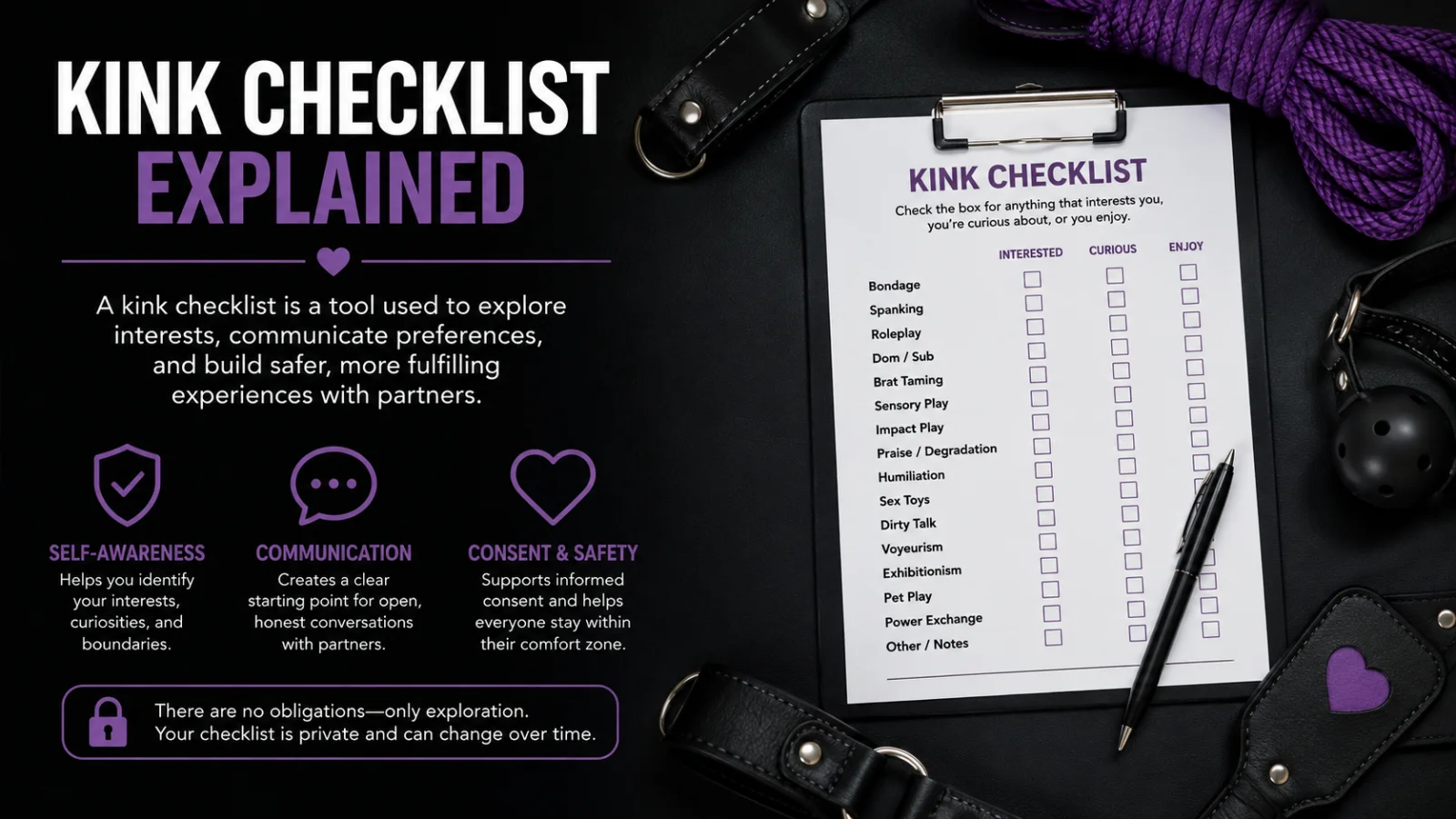

A BDSM or kink checklist is one of the most important communication tools used within the BDSM community. At its core, it is a structured way for people to discuss interests, boundaries, limits, experience levels, curiosities, and hard “no’s” before engaging in any kind of play or power exchange dynamic.
Contrary to many misconceptions, BDSM is not built around spontaneity or recklessness. Healthy BDSM culture emphasizes negotiation, consent, trust, honesty, and communication. A checklist helps facilitate those conversations in a clear, organized, and nonjudgmental way.
Some of the things that you will read will be repeated during other chapters when we get into negotiations and contracts.
What Is a BDSM Checklist?
A BDSM checklist is usually a document containing a wide variety of kinks, activities, relationship dynamics, roleplay ideas, sensations, and power exchange concepts. Each person reviews the list and marks their level of interest or comfort with each item.
Most checklists include categories such as:
- Curious about
- Willing to try
- Enjoy occasionally
- Strong interest
- Favorite activity
- Hard limit
- Soft limit
- Experienced
- No experience
The purpose is not to pressure someone into trying more things. The purpose is to create informed consent and mutual understanding.
Why BDSM Checklists Matter
1. They Improve Communication
Many people struggle to openly discuss sexual interests, fantasies, or boundaries. A checklist provides structure that makes these conversations easier and less intimidating.
Instead of awkwardly trying to remember every topic, both partners can independently review the checklist and compare answers later.
This often leads to:
- Better discussions
- Reduced misunderstandings
- More confidence
- Stronger trust
- Safer experiences
2. They Help Establish Consent
Consent in BDSM is active, informed, and ongoing. A checklist helps clarify:
- What someone wants
- What they may consider
- What they absolutely do not want
This reduces assumptions and helps prevent boundary violations.
A hard limit means:
“This is not okay under any circumstances.”
A soft limit usually means:
“I may consider this under certain conditions, or I am unsure.”
Understanding the difference is essential.
3. They Encourage Self-Discovery
Many people entering the kink community do not fully know what they enjoy yet.
Reading through a checklist can help someone discover:
- Interests they had never considered
- Activities they may want to research
- Things they definitely dislike
- Emotional or psychological triggers
- Areas requiring more discussion
There is no requirement to “like” everything. In fact, most experienced kink practitioners have extensive limits.
Common Categories Found on Checklists
Sensation Play
Activities focused on physical sensations, such as:
- Temperature play
- Wax play
- Impact play
- Sensory deprivation
- Tickling
- Massage
Bondage
Restriction and restraint activities, including:
- Rope bondage
- Handcuffs
- Mummification
- Predicament bondage
- Suspension
Power Exchange
Relationship or scene dynamics involving authority and submission:
- Dominant/submissive dynamics
- Service submission
- Protocols and rituals
- Discipline structures
- Ownership dynamics
Roleplay
Fantasy-based interactions such as:
- Authority figures
- Pet play
- Fantasy characters
- Consensual humiliation
- Age regression (non-sexual or adult consensual contexts)
Psychological Play
Emotional and mental dynamics, including:
- Praise
- Teasing
- Control
- Mind games
- Fear play
- Degradation or humiliation
These areas require particularly strong trust and communication.
How to Use a BDSM Checklist
Step 1: Complete It Separately
Each person should fill out the checklist independently without influence from the other person.
This encourages honest answers.
Step 2: Compare Results Together
Once complete, discuss:
- Shared interests
- Hard limits
- Curiosities
- Experience levels
- Emotional concerns
- Safety requirements
This should be a calm, pressure-free conversation.
Step 3: Discuss Safety and Boundaries
For any activity being considered, discuss:
- Safe words
- Physical limitations
- Medical concerns
- Emotional triggers
- Aftercare needs
- Experience levels
- Risk awareness
Step 4: Revisit Regularly
People evolve over time. Interests, comfort levels, relationships, and boundaries may change.
A checklist should be viewed as a living document rather than a permanent contract.
Important Concepts Related to Checklists
Hard Limits
Absolute boundaries that must never be crossed.
Respecting hard limits is non-negotiable.
Soft Limits
Areas of uncertainty or conditional interest.
Soft limits require careful discussion and should never be pressured.
Safewords
Pre-established words or signals used to slow down or stop play immediately.
Common examples:
Green = good
Yellow = slow down/check in
Red = stop immediately
Aftercare
Emotional and physical care provided after a scene.
This may include:
- Reassurance
- Hydration
- Blankets
- Emotional support
- Quiet time
- Physical comfort
Aftercare needs differ from person to person.
Red Flags When Using a Checklist
A checklist should never be used to:
- Pressure someone into activities
- Shame limits
- Manipulate consent
- “Test” compatibility aggressively
- Ignore inexperience
- Skip education and safety discussions
Healthy BDSM is collaborative, respectful, and consensual.
If someone dismisses your limits or attempts to coerce you after reviewing a checklist, that is a major warning sign.
Final Thoughts
The BDSM checklist is not merely a list of sexual interests. It is a communication and consent tool designed to promote trust, honesty, transparency, and safety.
For many people, it becomes the foundation for healthier conversations about intimacy, boundaries, power exchange, and mutual exploration.
The strongest BDSM dynamics are not built on shock value or intensity. They are built on communication, respect, and informed consent.
Note: I do have an extensive checklist that I use. You are more than welcome to message me for a copy that you can use as I will not violate TOS by posting the link.