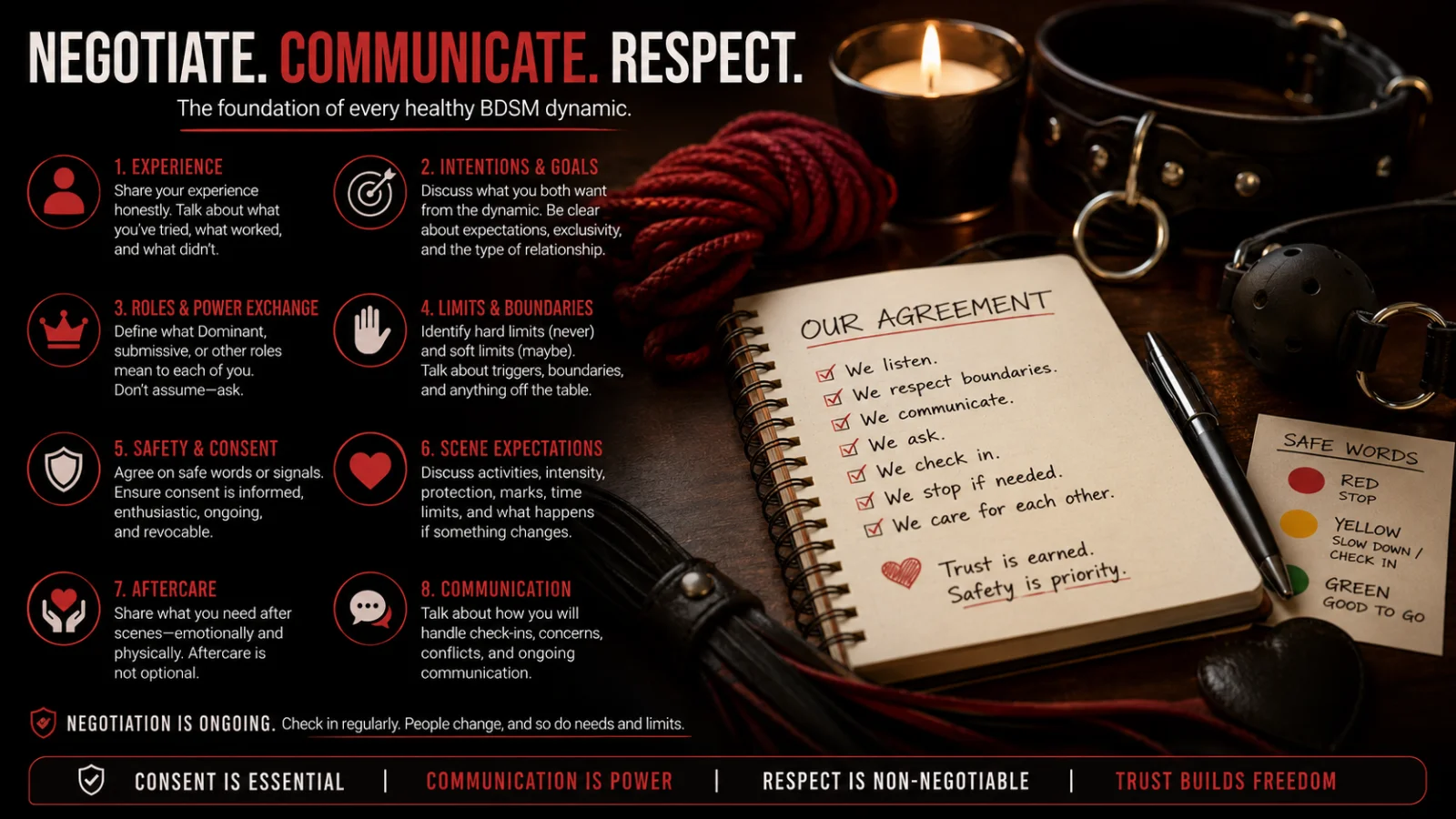

One of the most important parts of BDSM is negotiation. Before any collars are placed, scenes begin, or power is exchanged, both people should understand what they want, what they do not want, and what the relationship will look like moving forward.
Negotiation is not just about limits. It is about building trust, setting expectations, and creating a foundation where everyone involved feels respected, informed, and emotionally safe.
A healthy BDSM dynamic is not created through assumptions. It is created through honest communication.
What Is a BDSM Dynamic?
A dynamic is the structure of interaction between people within BDSM. It defines how power, responsibility, authority, care, submission, dominance, service, discipline, intimacy, or play will function between partners.
Dynamics can be:
- Casual or deeply committed
- Sexual, emotional, psychological, or service-based
- Temporary scenes or full-time lifestyles
- Equal outside scenes or power exchange at all times
- Romantic or non-romantic
Examples include:
- Dominant/submissive (D/s)
- Master/slave (M/s)
- Daddy/Mommy and little dynamics
- Sadist/masochist (S/m)
- Owner/property
- Service-oriented dynamics
- Switch relationships
No two dynamics are identical. The important thing is not fitting a stereotype — it is creating something consensual and sustainable for the people involved.
Why Negotiation Matters
Without negotiation, BDSM becomes unsafe emotionally, physically, and psychologically.
Negotiation helps partners:
- Understand each other’s expectations
- Identify hard and soft limits
- Discuss boundaries and consent
- Prevent misunderstandings
- Reduce emotional harm
- Clarify responsibilities
- Build trust before vulnerability occurs
A person who refuses to negotiate, dismisses boundaries, pressures fast commitment, or treats consent as optional is displaying major red flags.
Healthy Dominants negotiate.
Healthy submissives negotiate.
Healthy dynamics require both voices.
The Core Topics to Discuss
1. Experience Levels
Start honestly.
Questions to ask:
- Are you new to BDSM?
- What experience do you have?
- What dynamics have you tried before?
- What worked well?
- What did not work?
- Have you had bad experiences or violations?
- Honesty matters more than experience.
Pretending to know more than you do can create dangerous situations.
2. Intentions and Goals
People enter BDSM for different reasons.
Discuss:
- Are you seeking casual play or a long-term dynamic?
- Is this sexual, emotional, spiritual, psychological, or lifestyle-based?
- Do you want exclusivity?
- Are outside partners allowed?
- Is this online only or in person?
- What does success look like to you?
Many dynamics fail because partners assume they want the same thing without discussing it directly.
3. Roles and Power Exchange
Define what roles actually mean to each person.
For example:
A “Dominant” to one person may mean:
- Leadership
- Protective structure
- Bedroom-only control
- Full authority
- Service management
- Emotional guidance
A “submissive” may mean:
- Obedience during scenes
- Emotional surrender
- Service submission
- Sexual submission only
- Full-time power exchange
- Words alone are not enough.
Definitions matter.
4. Limits and Boundaries
This is one of the most critical discussions.
Hard Limits - Things that are absolutely off-limits.
Soft Limits - Things that may require caution, discussion, or gradual exploration.
Discuss:
- Physical limits
- Emotional triggers
- Psychological boundaries
- Medical concerns
- Trauma history relevant to play
- Privacy concerns
- Public exposure limits
- Relationship boundaries
Limits are not weaknesses. They are part of informed consent.
5. Safe Words and Consent
Every dynamic should discuss how consent will function.
Common systems include:
Safe Words - Traffic Light System
“Red” = Stop immediately
“Yellow” = Slow down/check in
“Green” = Good to continue
Nonverbal Signals - Important for gag play, emotional overwhelm, or inability to speak.
Consent should be:
- Informed
- Enthusiastic
- Ongoing
- Revocable
Consent can be withdrawn at any time. A healthy Dominant respects this immediately.
6. Scene Expectations
Discuss practical details before play.
Questions include:
- What activities are on the table?
- What protection methods are used?
- What level of pain or intensity is desired?
- What aftercare is needed?
- What should happen if someone becomes emotional?
- Are photos or videos allowed?
- Will marks be left?
- Are there time constraints?
The more intense the play, the more important detailed negotiation becomes.
7. Aftercare Needs
Aftercare is the emotional and physical support that happens after scenes or intense power exchange.
Needs vary greatly.
Examples:
- Cuddling
- Quiet space
- Verbal reassurance
- Food or hydration
- Check-in texts later
- Alone time
- Emotional decompression
Never assume someone’s aftercare needs. Ask directly.
8. Communication Style
Strong BDSM relationships require strong communication.
Discuss:
- How conflicts should be handled
- Preferred communication frequency
- How check-ins happen
- What accountability looks like
- How concerns can be raised safely
A submissive should be able to say: “I am uncomfortable.”
A Dominant should be able to say: “We need to discuss something.”
Without fear.
Negotiation Is Ongoing
A dynamic is not negotiated once and then frozen forever.
People evolve.
Comfort changes.
Experience changes.
Limits change.
Healthy BDSM dynamics include regular check-ins.
Questions like:
- Are you still happy?
- Do you feel fulfilled?
- Are any boundaries changing?
- Is anything feeling unsafe or neglected?
- What needs improvement?
Ongoing communication keeps dynamics healthy over time.
Common Mistakes During Negotiation
Moving Too Fast
Intense emotional connection can create pressure to rush commitment.
Take time.
Trust is built slowly.
Ignoring Red Flags
Be cautious of people who:
- Mock safe words
- Pressure limits
- Demand instant submission
- Claim “real submissives obey”
- Use BDSM to justify abuse
- Avoid accountability
- Isolate partners from support systems
Control without consent is not BDSM. This is ABUSE!!
Assuming Roles Replace Humanity
Dominants are still responsible for kindness, honesty, and self-control.
Submissives are still autonomous human beings with rights, needs, and boundaries.
Roles do not erase mutual respect.
Final Thoughts
Negotiation is not the boring part of BDSM.
It is the foundation that makes everything else possible.
The strongest dynamics are not built on intimidation or fantasy alone. They are built on communication, trust, honesty, respect, and informed consent.
A well-negotiated dynamic creates space for vulnerability, exploration, intimacy, and growth in ways that can be deeply meaningful for everyone involved.
In BDSM, communication is not separate from the dynamic.
Communication is the dynamic.