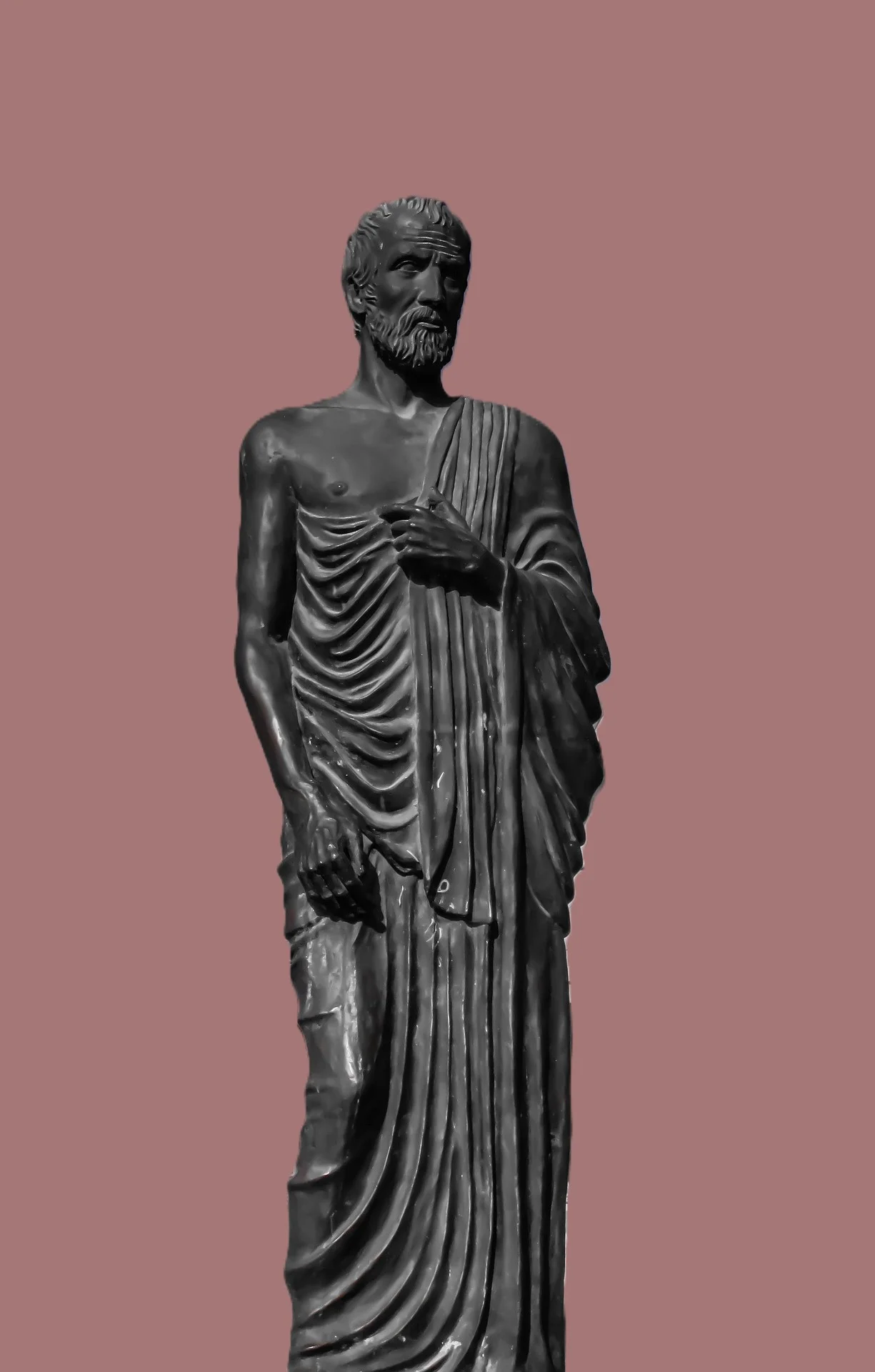
Perfection is subjective. Therefore, it is fluid and can be amended and adjusted according to the results of events, or a change in perspective.
The ideal is a standard envisioned and striven for but never achieved.
One of Zeno's Paradoxes:
Dichotomy Paradox:
To travel a distance, one must first travel half the distance, then half of the remaining distance, and so on, creating an infinite sequence of distances to cover. This suggests that any journey is impossible because it would take an infinite amount of time.
If you define The Ideal of something and apply Zeno's Dichotomy Paradox to the thought experiment in achieving it, the logical outcome is that you could never achieve perfection as defined by that ideal.
AI Overview
In calculus, the phrase "closer but never there" refers to the concept of a limit, where a function can get arbitrarily close to a certain value as its input approaches a particular point, but the function might never actually reach that value. This idea is central to understanding continuous and discontinuous functions, and it's also relevant to understanding infinite series and the concept of infinity itself.
That is the mathematical description of achieving an ideal.
Most of us realize that "The Journey and Quest for Perfection" is what counts because it works with our reality and provides some satisfaction.
pixabay