I have noted that popular science literature has introduced discussions on philosophical questions once more, and the questions about "time" are at the forefront.
Einstein definition:
Google AI
Einstein's theory of spacetime, as developed in his theories of relativity, describes how space and time are interconnected and not absolute, but rather relative to the observer's motion and gravity. In his special theory of relativity, Einstein showed that the speed of light is constant for all observers, regardless of their motion, leading to the concept of a unified space-time continuum. His general theory of relativity further expanded on this, proposing that gravity is a result of the curvature of spacetime caused by mass and energy.
This has been verified and made use of in the space age by accounting for it in satellite speed and distance from the closest center of gravity.
STOP.
Our sense of time and our perception vary little in our human reality. Navigation and accurate time keeping are important, but how we think of time is not often viewed in the number of decimal points our timepiece is accurate to.
Sometimes it seems more time has passed, and sometimes it seems less time has passed. The filter of our mind is affected by our age, our hormones, and the activities we engage in. As we are experiencing a trauma, it seems time is in slow motion, and as we are experiencing boredom, it seems time is dragging on. Our sense of time has little to do with how much time has elapsed as we humans define it, but more about how many things are occurring in time that we experience them.
Set aside philosophy: We observe how things age from stone to fruit to our bodies. It seems we are captive by the second law of thermodynamics, and the best we can do is slow down the deterioration of things with the passing of time.
I have observed it also seems we have some form of internal clock (life in general), as we somehow usually know when it is time to wake up, go to sleep, go to work, find a mate, time to eat and so on even though these biological clocks are subject to error they are also subject to improvement with training.
For now, we define time as a second, a minute, a day, a week, a month, and a year, etc.
The most accurate practical clock we have for keeping the time scale we as humans adopt
Google AI:
AI Overview
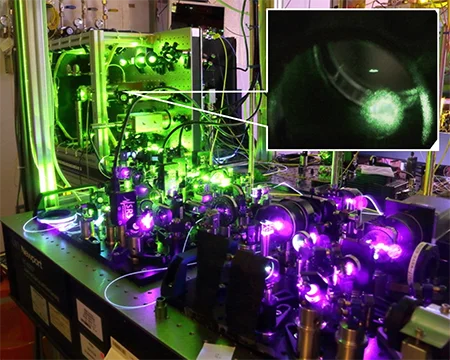
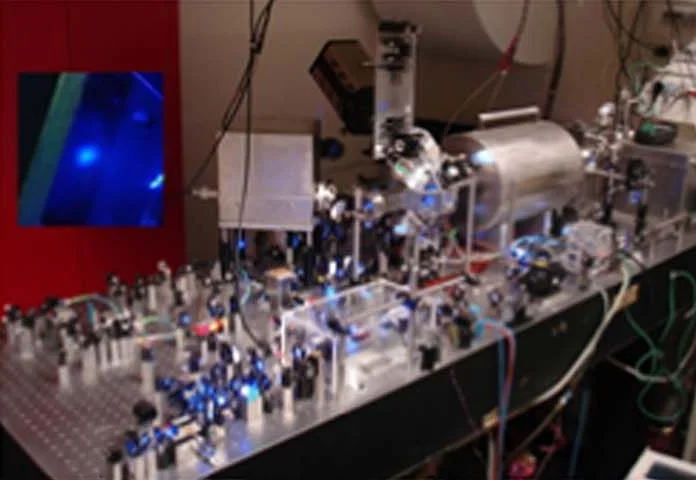
The most accurate practical clock currently available is the strontium optical lattice clock. It can lose less than one second every 40 billion years. This level of precision is achieved by using a lattice of light waves to trap and measure strontium atoms, allowing for a more stable and precise timekeeping mechanism than traditional cesium atomic clocks.
Google public domain images